Termite Treatment: How to Keep Termites at Bay

how to keep termites away

An introduction to termites

Termites are ‘eusocial’ insects which, similar to ants and bees, live in “colonies”. Typical termite habitats are subtropical and tropical regions – but in Australia, some of the highest termite activity zones also exist in cooler areas (like much of Melbourne).

Their diet includes dead plant material, predominantly cellulose; generally they prefer to get this in the form of wood, leaf litter and soil. Termites are important to the natural ecosystem, due to their ability to decompose waste. However, when it comes to your house, termites are certainly foe, rather than friend, as they are notorious for their ability to destroy anything made out of wood. In Australia, up to 1 in 3 houses is suffering from a termite infestation and while infestations are more common in Queensland and other warmer subtropical and tropical areas, termites are found in all States and Territories.  Termites can cause significant damage to Australian homes and properties, with the potential for millions of dollars in repairs. But there are fortunately ways to prevent or reduce the risk of a termite infestation without having to call in professional pest control services.

What is Termite Damage & How to Spot It?

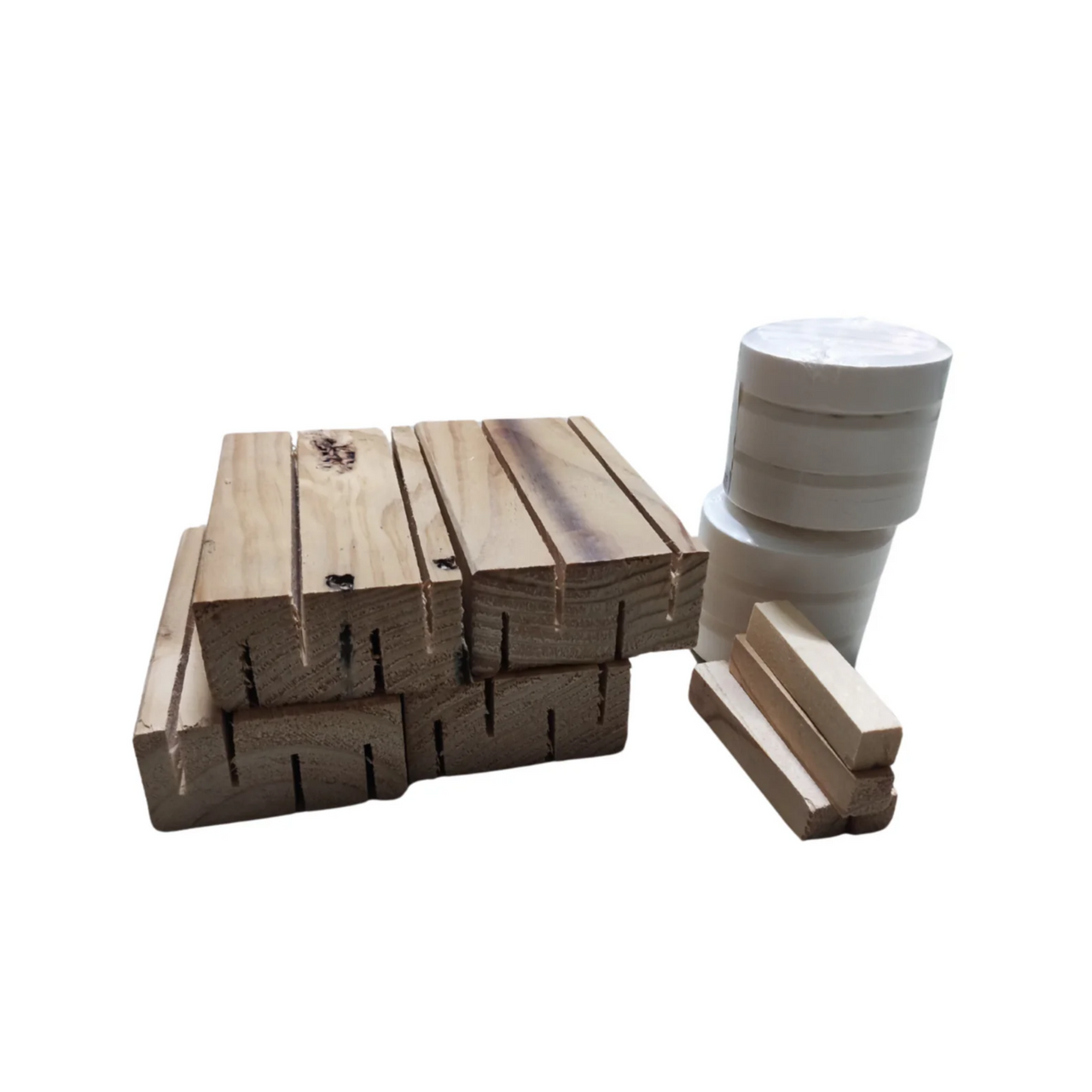
Termites feed on wood and anything that contains cellulose in general (cellulose is the dream food for termites – which is the reason why our termite attractant tablets contain pure cellulose!). Termite nests are often hard to notice, especially because they adhere to the insides of walls and wooden frames. We often discover a termite nest in our house only when the colony has grown quite large. In the worst cases, by the time we discover colonies of termites nesting and eating away valuable assets, the damage has become widespread and difficult to restore. In Australia, termite infestation alone is responsible for property damage of at least $800 million each year.

Termite infestation is also not limited to wooden furniture and structural components in your house. Termites can nest in and infest soil, wallpaper, books, magazines, plaster and even boxes. To stay on top of potential infestations, it’s important to know the tell-tale signs of termite damage:

  • Mud tubes on walls that look like accumulation of soil and dirt

  • Soft and spongy wood, hollow floors and walls, buckled paint or bubbled wallpaper.

  • Wood tunnels that can be found in infested wood panes and other areas

  • Hollow sound on wooden panels, doors and window sills when tapped. 

  • Discarded wings and faeces near windowsills and doorframes, as well as gaps in beams and joists.

How and why do termites get inside our homes?

Termites might give you a nasty surprise when you discover them in your home. But before we jump onto the reasons for termite infestation, we need to understand the categories of termites that infest households.

The table below highlights three different categories of termites. As you can see, every type of termite has its own preference for wood, moisture and a unique way of making a habitat in your house. 

Aspect

Drywood Termites

Dampwood Termites

Subterranean Termites

Type of Wood

Dry wood

Moist or damp wood

Softwood

Infesting Site

House framing, structural timbers, hardwood floors, furniture

Rotting or decomposing logs, stumps, wood piles, utility poles

Any wooden structure including furniture and walls (exterior and interior)

Contact with Soil

No

No

Yes (live underground)

Moisture Source

Infested wood

Infested wood

Habitat (soil)

Features

The wood is bored from inside-out; hence the outer surface may not show symptoms of infestation and appear undamaged

Faecal pellets, dead swarmers, and soft spots

Mud tubes, accumulation of soil in infested sites, damaged wood sounds hollow when tapped


There are a number of reasons that termites might be attracted to your home. Geographical and environmental factors come into play, which is why only having a clean house or a perfectly trimmed garden doesn’t always keep you safe. Below we explore some of the common reasons why termites infest your home:

  1. Moisture is one of the most common causes of termite infestation. Termites may live on wood but they need water to be able to digest the cellulose they obtain from food. Now, you might be thinking “I live in an area where rainfall hardly occurs. I also make sure to get rid of any stagnant water that may attract insects. Why do I still have termites?”. Rain or stagnant water are not the only sources of moisture. Some other moisture culprits in the house include:
    1. Leaking pipes
    2. Drainage blocks
    3. Attics and crawl spaces
    4. Poorly ventilated areas
  2. Cracks and gaps can also serve as termite habitats. If the concrete foundation of your house has fissures, these provide for a perfectly moist and dark home for termites to nest in. Once termites get settled in these areas, finding a food source follows suit and suffice to say, food sources for termites are plentiful inside your home. Termites can easily channel into wooden frames, doors, windowsills and even furniture.
  3. Wooden foundations that provide some homes with structural integrity also facilitate termite infestations. Any wooden foundation that comes in contact with your home and a termite habitat acts not only as a potential food source, but as a bridge for termites to infest your home.

Why is termite treatment necessary?

Wood is an essential component of infrastructure – and primarily our homes. It’s in a termite’s nature to be attracted to wood as a meal, but what’s natural for them is debilitating and expensive for us. Moreover, termites have the potential to make the basic structure of your home weak and unstable. Subterranean termites can eat through your house’s infrastructure in about three years, while drywood termites can do the same in five to eight years. It’s critical to deploy a system to prevent termites to save your precious property from being eaten away.

What are some ways of termite treatment and control?

Methods of dealing with a termite colony are very different to deterring other types of bugs like cockroaches or flies. Termite colonies have an approximate radius ranging from 50 to 100 meters. Each termite colony can be the home of from 60,000 to 1 million termites. Yes, you read that right!

Therefore, when controlling and treating termite infestations, you’re not thinking about one insect here, you’re confronting an army. Treatment solutions for termites need to be on a large scale.

Before we consider the treatment options, here are some ways to prevent termite infestations in the first place:

  • Get rid of any damaged wood, wooden debris, logs and stumps around your house
  • Try to avoid getting wooden structures into close contact with soil
  • Ensure proper ventilation at your home to minimize moisture
  • Fix pipe leaks, decayed roofs and moisture-laden walls
  • Declutter your home and dispose of any unnecessary materials that may attract termites.

Below we’ve summarised the treatment options out there on the market.

Chemicals

Known as termiticides, these chemicals are used to destroy existing termite nests in the soil. Termiticides can be applied pre and post construction and have been found to be an effective solution against termites, although it is advised to be used under supervision or by professional termite exterminators, due to the potential dangers of using toxic chemicals.

Some termiticides, including surface sprays, injected sprays and foams, and Borate are also used to treat wood to prevent further colonies from forming and to get rid of any termite colonies that exist. The biggest issue with products of this kind is that termiticides are toxic and can be hazardous to children and pets, as well as having a negative ecological impact. Since they are sprayed indiscriminately, it’s also not possible to control their spread beyond the target area.

Eco-Friendly DIY Termite Treatment in Australia

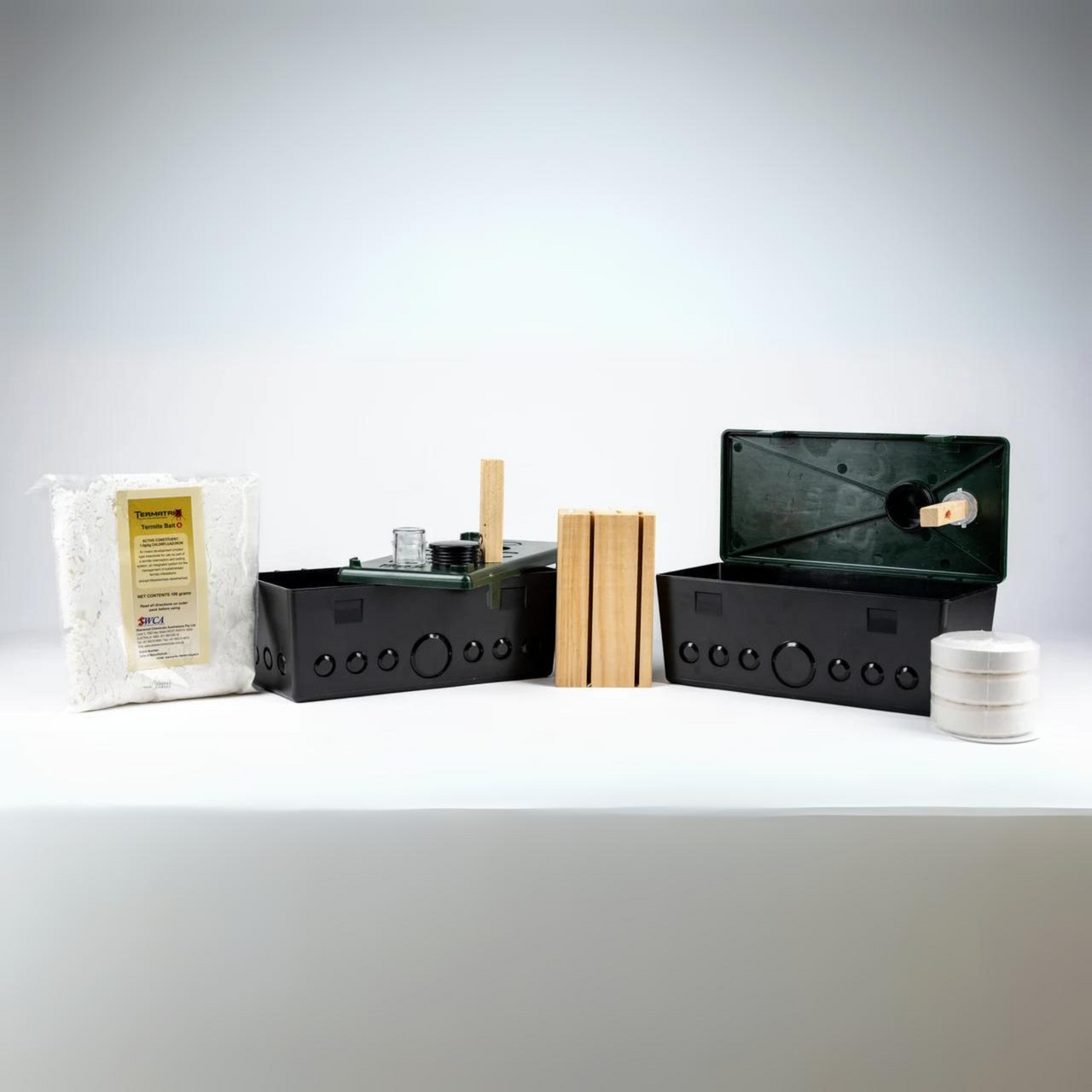
EnviroBug's termite treatment options can be adapted by almost anyone and have comparatively lower risks of mishandling as with chemicals. Our termite treatment options are cheap, accessible and come in a variety of categories ranging from baits to barriers to treatment packages. These come in the form of kits that can be set up easily by following step by step instructions.

For many homeowners, the biggest advantage of DIY termite treatment systems like the EnviroBug Termite Ninja is that they cost only a fraction of a commercial solution, because you aren’t paying an overpriced fee for an expert installer, or proprietary systems that achieve the same result, but lock you into annual inspection fees. With the Envirobug Termite Ninja system it’s very easy to undertake regular visual inspections of the traps to ensure they aren’t affected, and to act quickly if they are.

Moreover (and to us the most important point of difference), our termite management system is eco-friendly so you won’t be presenting any threat to the environment. The traps are especially made to monitor for termite activity and, if activity is spotted, for you to easily apply a safe to use termite growth inhibitor killer bait that worker termites eat and take back to the nest, killing them, and ultimately taking out the Queen – triggering a colony collapse in the process. EnviroBug's eco-friendly termite treatment systems do not contain any nasty chemicals, which makes it safe for you, for kids, for pets and for the environment. But they are extremely effective.

How much does termite treatment cost?

Depending on the size of your house, your choice of treatment option and the degree of infestation, termite treatment cost can start from $300 (for a small DIY kit) and extend to as much as $5000 for a commercial solution in a large house. Professional pest control services in Australia charge a large initial fee for pest control and removal – we have had conversations with many customers who were quoted over $3,000 for an exterminator to apply chemicals to the ground, only to achieve the same result with one of our kits – without harming the environment – for under $300. The difference can be stark:

Termite treatment comparison table

Conclusion

All insects, even termites, have their own role to play in our ecosystem and environment. As termites survive on wood, they act as efficient natural decomposers of wooden debris in the environment. However, when these insects make their way inside our house, that is way too close for comfort. In order to protect valuable assets from the attack of these insects, proper management plans should be implemented in our homes. Of course, prevention is better than cure – so an effective baiting and monitoring system is essential – but once you see any termite activity, you need to act quickly and decisively to take them out.

FAQ

Termite bait stations need to be monitored and maintained year-round.

Termites are one of the hardest pests to get rid of, and they often come back after treatment. The reason for this is simple; every available treatment is palliative care, but not permanent.


EnviroBug blog and resources

You may be interested in...

Products

sale
Termite Ninja - Ultimate DIY Termite Eradication System - Envirobug
Termite Ninja - Ultimate DIY Termite Eradication System from $297.00 $891.00
Get professional grade protection – but save 80% to 90% vs. paying an exterminator (Save over $4,000 for a large house) How Does the Termite Ninja Stack Up? Termite Ninja Traditional Exterminator Setup cost One-off kit purchase $2,000–$5,000+ treatment Annual monitoring $0 — you do it yourself $900+ per inspection Treatment cost Cost of killer bait only $2,000–$4,000+ Chemicals APVMA-approved IGR — harmless to humans and animals Often broad-spectrum soil chemicals - these can be toxic to both humans and pets. Flexibility Walls, ground, in-ground, stumps, patios Ground-only in most systems Lock-in None — your system, your schedule Annual contracts standard Termites cause more damage to Australian homes than fires, floods and storms combined — and the traditional answer is an exterminator who charges $900 a year just to look around and thousands more to treat. The Termite Ninja changes that equation entirely. Professional-grade monitoring, attraction and colony eradication — installed by you in minutes, owned by you permanently, with no ongoing fees and no locked-in contracts. We've never had a kit returned. Not one in 18 years. Safe for families. Devastating for colonies. APVMA-approved, harmless to humans and pets — catastrophic for the colony. Where Can I Install It? Termite Ninja is the only system that allows you to directly install termite bait stations to monitor and treat termites anywhere – not just on the ground. On walls — where mud tubes or damage is visible On the ground — around the full perimeter of your home In the ground — buried in-ground stations for perimeter interception On stumps — a favourite entry point for subterranean termites On patios and hardstand — anywhere termites have been spotted or are likely to travel. Why Choose Envirobug DIY Termite Ninja Multi-purpose Termite Control Monitor Bait Stations Compared With Others?   The Flexibility of Termite Ninja Monitor Bait Traps Compared With Other Traps:      How It Works The Termite Ninja runs on three phases: 1. Monitor — Specially prepared bait stations containing fresh wood and pure cellulose tablets are installed around your property's perimeter and anywhere termite activity is suspected. Termites are hardwired to seek cellulose. They find your stations before they find your home. 2. Detect — Check each station through the clear viewing window without touching or opening it. No disturbance, no false alarms, no tools. Just look. 3. Eradicate — When activity is confirmed, use the innovative stacking system to apply killer bait directly above the active station without scaring off the feeding termites. Workers carry chlorfluazuron IGR (a safe, non-toxic growth inhibitor) back to the nest, share it through natural colony behaviour, and the queen dies. Colony collapse follows. No guessing. No approximation. Bait applied directly where termites are active — like a ninja, right to the source. And they never saw it coming. Key Features Install Anywhere Termites Go — The only DIY system that lets you place bait stations on walls, on the ground, in the ground, on stumps and on patios. Not just ground-level. Everywhere termites travel. Saves Up to 80–90% vs. Professional Treatment — A large home can save over $4,000 in treatment costs and $900 every single year in inspection fees. The kit pays for itself almost immediately. Stacking System — The Game Changer — The innovative stacking design lets you apply killer bait directly above an active station without opening it or disturbing the termites feeding inside. This is the detail that makes the difference between termites staying and termites leaving. Clear Viewing Window — Monitor every station with a visual check, no tools, no disturbance. See exactly what's happening inside without touching a thing. Ant-Proof Design — Specifically designed to exclude ants. What you find inside is termites — not a false positive colony of black ants that wasted your time. Reusable Tough ABS Plastic — Built to last years of outdoor exposure, ground contact and weather. Can Be Painted to Match Your Home — Wall-mounted stations blend into your exterior. No eyesore, no visible pest control hardware on your facade. Everything Included — Full complement of cellulose attractant and killer bait powder included with your kit. Step-by-step installation guide and video delivered immediately by email after purchase. Safe. APVMA Approved. — Chlorfluazuron IGR at 1% per kg of pure cellulose. Completely harmless to humans, kids, pets and native wildlife. Devastating to termites. What's in the Kit Every kit contains all of these components - see the below table for the number of each included with each kit size: Termite Ninja multi-purpose ABS bait stations All assembly components — ready to install out of the box An equal number of specially prepared timber attractant and cellulose tablets - to attract termites Chlorfluazuron IGR Killer Bait powder sachet/s - to kill termites Immediate email delivery of step-by-step installation guide and video tutorials Additional attractant tablets and killer bait powder available separately as needed. Package Includes 4 Station 12 Station 18 Station 24 Station 36 Station Bait Station Boxes 4 12 18 24 36 Lid Kits 4 12 18 24 36 Indicator Dowels 4 12 18 24 36 Cellulose Bait Tablets 4 12 18 24 36 Wooden Termite Baits 4 12 18 24 36 Killer Bait Powder Treatments 1 2 3 4 5 User Manual ✓ ✓ ✓ ✓ ✓ Phone & Email Support ✓ ✓ ✓ ✓ ✓ Not sure which size to choose? Measure your perimeter in metres and divide by three — that's your minimum station count. Add one or two spares for killer bait treatments. When in doubt, size up. A gap in your perimeter is the only thing a termite needs.
Quick View
sale
DIY Termite Killer Bait Powder Replacement - Envirobug
Termite Ninja - Killer Bait Powder Replacement from $75.00 $322.00
You've spotted termite activity in your Termite Ninja station. Now you need the one thing that takes a detection event and turns it into a colony collapse. This is the APVMA-approved killer bait powder that worker termites consume, carry back to the nest and share — all the way to the queen. No poisons. No chemicals harmful to humans or animals. Just a growth regulator that shuts the colony down from the inside out. Killer bait only — Termite Ninja stations sold separately. Shop the Termite Ninja DIY System here.  How the Bait Works The killer bait contains chlorfluazuron — a termite growth regulator (IGR) at 1% per kg of pure cellulose. Worker termites consume it, but it doesn't kill them instantly. Instead it weakens their jaw structure, rendering them unable to eat. As food becomes scarce in the colony, termites turn cannibalistic — and the living termites begin consuming those that have already ingested the growth regulator. The IGR passes vertically through the colony, termite to termite, until it reaches the queen. Colony collapse follows. This is the same mechanism professional exterminators use — without the thousands of dollars in fees, the annual contracts, or the chemical soil treatments. Key Features Takes Out the Whole Colony, Not Just What You Can See — Growth regulator passes from termite to termite through natural colony behaviour, ultimately reaching and eliminating the queen. One application, complete eradication. The Same Active Ingredient Professionals Use — APVMA-approved chlorfluazuron IGR at professional strength. No watered-down DIY formula — the real thing, available to you directly. Safe for Humans, Pets and Native Wildlife — Chlorfluazuron is specifically targeted at termite biology. Completely harmless to humans, animals and the broader environment at the rate used. No Use-By Date — Provided it's kept sealed and dry, this bait has an indefinite shelf life. Stock up without worrying about waste. Available in 2, 5 or 10 Packs — 100g per sachet. Match your pack size to the scale of activity across your Termite Ninja stations. Designed for the Termite Ninja Stacking System — Applied via EnviroBug's innovative stacking method, which places the bait directly above an active station without disturbing the termites inside — critical for keeping them feeding. When to Apply the Killer Bait Apply Killer Bait as soon as you observe termite activity inside a Termite Ninja station — indicated by mud tubes, frass, or visible termite presence through the clear monitoring window.  Tip: Speed matters once you've detected activity. The sooner the bait is applied, the sooner worker termites begin carrying it back to the colony. Don't wait for activity to intensify before acting. How to Apply Confirm activity — Check your station's clear viewing window for signs of termite presence Assemble a treatment station — Prepare a new Termite Ninja station with a sachet of Killer Bait inside Stack it on top — Place the treatment station directly above the active one using the stacking system — this delivers bait without opening or disturbing the active station Monitor regularly — Check every 1–2 weeks for ongoing activity and reapply if needed Look for colony collapse — Activity will slow and eventually cease as the IGR works through the colony to the queen
Quick View
sale
Pure Cellulose Termite Bait Unit Attractant - Envirobug
Pure Cellulose Termite Attractant Tablets from $25.00 $50.00
Your Termite Ninja stations work because termites find the bait inside them impossible to ignore. Pure cellulose is the gold standard termite attractant — the same material their colonies depend on for survival. These replacement tablets keep every station in your perimeter fresh, active and drawing termites toward your system and away from your walls, floors or joinery. Why Pure Cellulose? Not all timber attractants are equal. Pure cellulose tablets are specifically processed to maximise termite attraction — stripped of the resins and compounds that might deter feeding, leaving only what termites are hardwired to seek out. It's the most attractive form of cellulose you can put in a station, and that distinction matters when your home is what you're protecting. Cellulose attractant tablets only — killer bait powder and Termite Ninja stations sold separately. Shop Killer Bait Powder here. Shop the Termite Ninja System here.  Key Features Maximum Attraction. Minimum Interference. — Pure cellulose tablets contain nothing that deters feeding — no resins, no preservatives, no compounds that signal danger to a foraging termite. Just irresistible attractant, working around the clock. Keeps Your Perimeter Hot Year-Round — Fresh tablets restore every station's drawing power the moment they're installed. An active, stocked perimeter pulls termites toward your system — not toward your home. No Active Chemicals. Safe for Everyone. — Pure attractant only, with no toxins, no poisons and no risk to humans, kids, pets or native wildlife.  Available in 3, 6, 9 and 12 Packs — Match your pack size to the number of stations you're running. Works Seamlessly with the Full Termite Ninja System — Drop-in replacement for ground, wall, stump, in-ground and patio stations. When to Replace Your Tablets Tablets inside a station appear consumed, reduced or dried out It has been 3–6 months since your last replacement depending on activity level You're heading into spring and summer when termite foraging intensifies A station has just been treated with killer bait and you're returning it to monitoring mode Tip: After confirming colony collapse following a killer bait treatment, replace tablets and return the station to monitoring mode immediately. Even though a collapsed colony won’t come back, neighbouring termite colonies can move into vacated territory — a restocked, active perimeter keeps them from claiming it. How to Replace Your Tablets Check each station through the clear viewing window before opening Open only inactive stations — never disturb a station showing active termite feeding Remove spent or exhausted tablets from the station housing Insert fresh cellulose tablets from your refill pack Close and return the station to its installed position Monitor regularly — check weekly or fortnightly if you have an infestation. Check every 4–8 weeks in active season, every 8–12 weeks in cooler months
Quick View
Termite Ninja Refill Packs - Envirobug
Termite Ninja - Attractant Refill Packs from $69.00
You've already done the hard work — your Termite Ninja stations are in the ground, on the walls, around the perimeter. Now all you need is fresh timber bait to keep them actively attracting. These refill packs give you everything required to restock your monitoring stations and keep your perimeter working year-round, without calling an exterminator or paying for a single inspection. Timber attractant refill only — killer bait and Termite Ninja stations sold separately. Shop Killer Bait Powder here. Shop the Termite Ninja System here.  Why Keep Your Stations Stocked? An empty or exhausted bait station is a station that isn't attracting. Termites need a live, active timber bait source to be drawn in and begin feeding — once the bait is consumed or dried out, your station becomes passive. Regular restocking keeps every station in your perimeter hot, active and pulling termites toward your detection system rather than toward your home. Key Features Keeps Your Perimeter Active and Attracting — Fresh specially prepared timber bait restores your stations' drawing power, ensuring termites are lured toward your system before they find their way into your walls, floors or stumps. No Exterminator. No Inspection Fee. Ever. — Restock your own stations in minutes. No contractor, no annual inspection contract, no $900 fee just to check what you can check yourself through the clear viewing window. Specially Prepared Timber Bait — EnviroBug's recycled timber bait is specifically prepared to be irresistible to termites — not just any wood. It's the right material, prepared the right way, to maximise attraction in every station. Compatible with the Full Termite Ninja System — Designed exclusively for EnviroBug Termite Ninja bait stations. Drop-in replacement that works seamlessly with your existing setup — ground, wall, stump and in-ground stations. Safe for Humans, Pets and Native Wildlife — Pure cellulose timber bait with no active chemicals in the monitoring phase. Nothing toxic, nothing harmful — just a timber attractant that termites can't resist. Available in Multiple Pack Sizes — Match your pack size to the number of stations you're running. Keep spares on hand. When to Restock Your Stations Separate to monthly checks for termite activity, you should thoroughly check your stations every 3–6 months by opening them up and looking at the state of the wooden and cellulose tablet baits. This is especially the case as you're heading into warmer months (when termite activity peaks). Specifically, you should replace your baits when: The timber bait or cellulose tablets inside the station appear consumed, reduced or has got wet You've recently treated an active station and want to return it to monitoring mode Tip: After a successful treatment with killer bait and confirmed colony collapse, restock your stations with fresh timber attractant, cellulose tablets and return them to monitoring mode — termites from neighbouring colonies can move in to fill the territory within 12 months. How to Restock Your Stations Check each station through the clear viewing window for signs of activity before restocking Open inactive stations that show no current termite presence Remove spent or exhausted timber bait and replace with fresh attractant from your refill pack Close and return the station to its installed position Monitor regularly — every 4–8 weeks during active season, every 8–12 weeks in cooler months
Quick View

Designed for Australian Conditions

Eco-friendly

No poisons

12 month warranty

30 Day

satisfaction guarantee

Afterpay American Express Apple Pay Google Pay Shop Pay Visa Mastercard