Termite Nests: Structure and Features

termite nests

Termites are wood-eating insects that live in colonies and survive on cellulose obtained from wood. Although termites are often termed as "white ants", they are actually closer relatives to cockroaches than ants, especially wood cockroaches that feed on wood like termites. Termites generally live in the wild and feed on decaying wood. However, termites can make their way into homes and feed on foundational wood and furniture, making them a pest when inside our home.

The termite caste system

Termites, similar to bees and ants, live in organised social structures. These groups have multiple overlapping generations of termites and a precisely defined role hierarchy between reproductive and non-reproductive members. This role hierarchy amongst termites is also referred to as the "caste system". In a typical termite social structure, there are 6 different types of termites:

  • King

  • Queen

  • Secondary queen

  • Tertiary queen

  • Soldiers

  • Workers

These six different termite castes are classified into three major groups:

  • The reproductives (comprising a king termite, a queen termite, a secondary queen and a tertiary queen)

  • The workers

  • The soldiers

More on the structure of termite social organisation and definite roles that each member plays will be discussed in the following sections of the article.

What does a termite look like?

There are about 2,000 termite species known to the world, of which 350 species are found in different regions in Australia. The common termite species include:

  • Mastotermes (or Giant Termite)

  • Cryptotermes (or West Indian Dry-Wood Termite)

  • Neotermes (or Ring-Ant Termite)

  • Porotermes (or Dampwood Termite)

  • Heterotermes

  • Coptotermes

  • Schedorhinotermes

  • Microcerotermes

  • Amitetermes (or Compass Termite)

  • Nasutitermes

These common species of termites fall into three major groups:

  • Dampwood termites

  • Drywood termites

  • Subterranean termites

Most termites have similar features:

  • length of their body ranges from 6 to 13 millimetres

  • thick waist

  • short legs

  • a straight antenna

Some termites have distinctive features that separate them. For example, in a termite caste, reproductives have wings which they shed upon reaching maturity and leaving their termite nests. Queen termites have a massive abdomen which restricts their mobility. Both worker termites and soldier termites are wingless and without eyes. Worker termites have hard and strong oral features that help them in gnawing wood. Soldier termites have a large head and strong mandibles which can be used for defence.

Comparison Table

Features

Dampwood Termite

Drywood Termite

Subterranean Termite

Β 

Dampwood termite

MAF Plant Health & Environment Laboratory (2011) Dampwood TermiteΒ (Porotermes adamsoni)Β  http://www.padil.gov.au.

Dampwood termite

Patrick Gleeson,Β CSIRO

Subterranean Termite

Scott Bauer, USDA Agricultural Research Service,
Bugwood.org

Size

Β 13 to 16 millimetres

10 to 25 millimetres

3 millimetres

Colour

Creamy white to brownish

Creamy white to light brown

Creamy white to dark brown/black

Location

Highland and Coastal Victoria, New South Wales, Queensland, Northern Territory and Southern Australia

Maryborough, Brisbane, Bundaberg, Townsville and Rockhampton

Victoria, Eastern New South Wales, South Eastern Queensland

The termite nest and social structure

Termites are insects and their usual habitat is not your house, but outside in nature. Although one termite might not look threatening due to its size, if you put together thousands and thousands of termites, they are quite skilled as architects.

A termite nest or mound can extend up to 5 metres, maybe higher. This towering mound is the collective effort of an entire termite population, rather than a single termite. Termites, based on preference, can live in either nests or mounds. Termites found in the wild generally live in mounds. However, those who invade their way inside human habitats tend to prefer living in nests because of the abundance of food.

A termite nest structure starts with two reproductives: a male and a female. These winged reproductives (or "alate") were also part of an established group but upon reaching maturity, they paired and took flight in search of a new nest. Once the pair find a suitable nesting site (subterranean termites nest in soil whilst dampwood and drywood termites prefer timber), they shed their wings, mate and lay eggs. The termite group now has a king termite and a queen termite. Termite queens, during the early stage can lay 10–20 eggs. However, as years pass and the population grows old, termite queens can lay as many as 1000 eggs a day. For some species of termites, the queen has the capacity to lay as many as 40,000 eggs per day.

Termite eggs are tiny, white or light brown in colour and translucent. With time, the termite eggs hatch and produce larvae. The worker termites are assigned with the duty of sourcing and foraging food, caring for other caste members and in maintaining the nest structure. Soldier termites protect the nest from invaders, like ants.

What does a termite nest look like in your house?

We first need to know how these insects living in a mound in nature suddenly start living rent-free inside our house. Two factors come into play when termites decide to migrate:

  • food

  • moisture

Most houses have foundational elements made of wood. When infrastructure is built upon soil or nearby timber (which may be an existing termite nest), the wood in the foundation comes in contact with a pre-existing termite population. Termites have a voracious appetite and a new, rather appetising source of food. Termites start eating their way through the foundation, eventually building a full-scale infestation within walls and wooden framework. The furniture in our homes can become their dessert.

Identifying a termite mud nest can be difficult, firstly because no one randomly breaks open wood to check for possible termite infestations and secondly, because early signs and symptoms are covert. Different types of termites have their own signature invasion and nesting manoeuvres. In the following section, some common features of a termite nest and tell-tale signs that there is a nest are covered.

Drywood/Dampwood Termites

These types of termites start off their population inside dry or damp wood so you may find galleries inside the wood they colonised, which resembles a maze. These galleries cannot be observed from outside the infected wood, unless it is taken apart.

Subterranean Termites (exotic to Australia)

Subterranean termites live primarily in soil, therefore they only come in contact with wooden entities inside our house only when the house itself is in some way in contact with their population. Porches, patios, window sills and framework bridge the gap between an existing termite population in the soil and your house. Because subterranean termites live in soil, going towards a more nutritious food source inside your house is quite a journey for them. In order to ease their migration, subterranean termites build mud tubes. Mud tubes look like accumulation of dust and they can be found very commonly near termite infested areas of your home. Termites use these mud tubes to travel from their nest, to this new food source and sometimes from one food source to another. Mud tubes also provide termites with protection and cover during migration.

As primary indications of termite infestation, you can often find discarded wings inside your house left by swarmers or new alates. Termite frass or termite droppings are another telltale indicator of a termite infestation, which are sometimes mistaken as saw dust.

Prevention and Protection

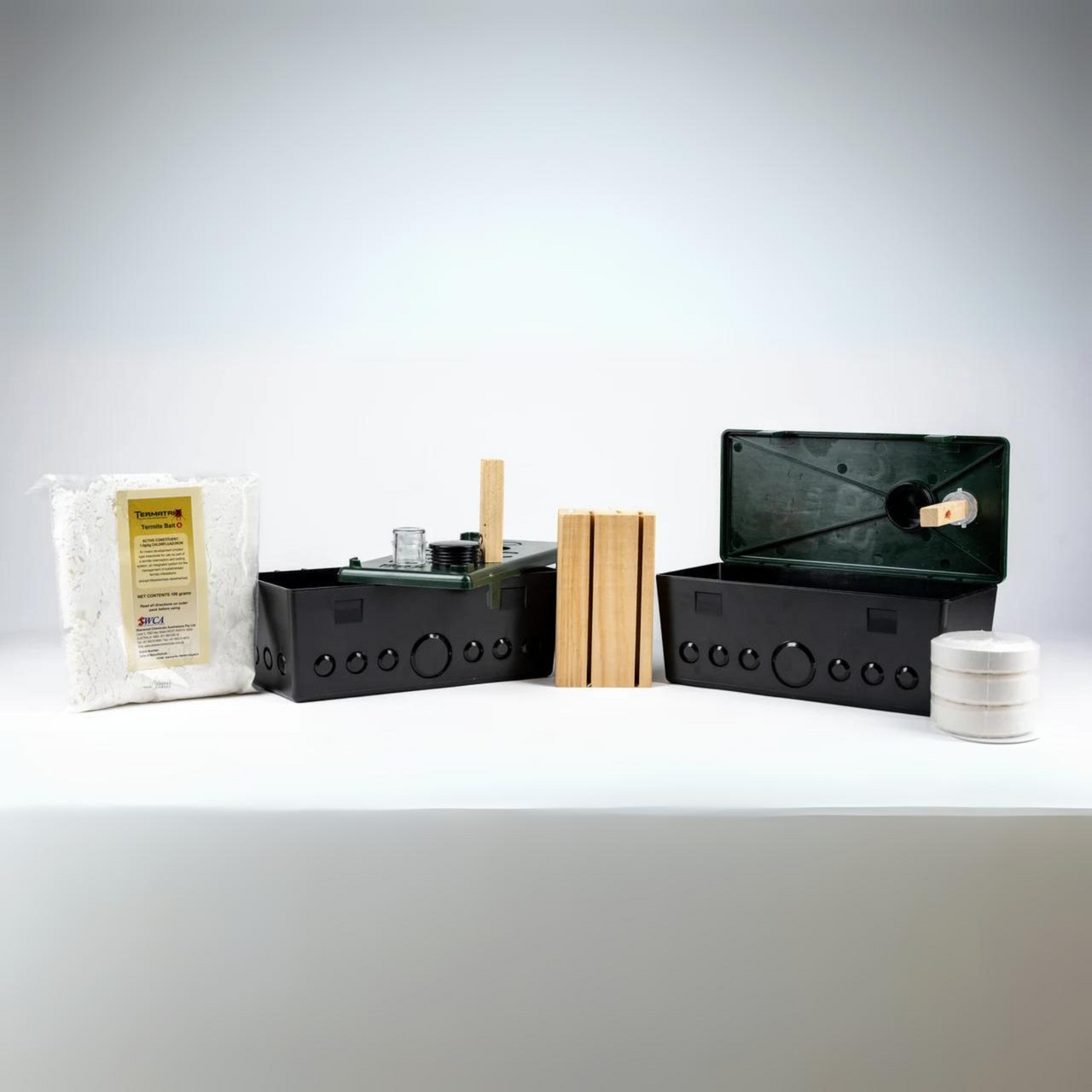
Termites are voracious eaters. A population containing hundreds and thousands of termites can eat through infrastructure before you can act and cause damages costing millions of dollars. As a preventive measure, it is always recommended to conduct a thorough check of your home to scan for possible termite infestation or sites at risk. We recommend a DIY termite baiting system which are cost effective, eco-friendly and can be easily handled by homeowners. These measures can help you keep termites away and save you from bearing devastating loss and expenses.

FAQs

While most termites nest in decaying or dead trees, some highly destructive termites, like the Formosan termites can be found nesting in living trees. The trees these termites generally favour are oak, ash, and cypress. Formosan subterranean termites are not native to Australia; however, there is a high risk of introduction since they are an invasive species. If you notice any signs of infestation, please promptly inform the Department of Agriculture Fisheries and Forestry.

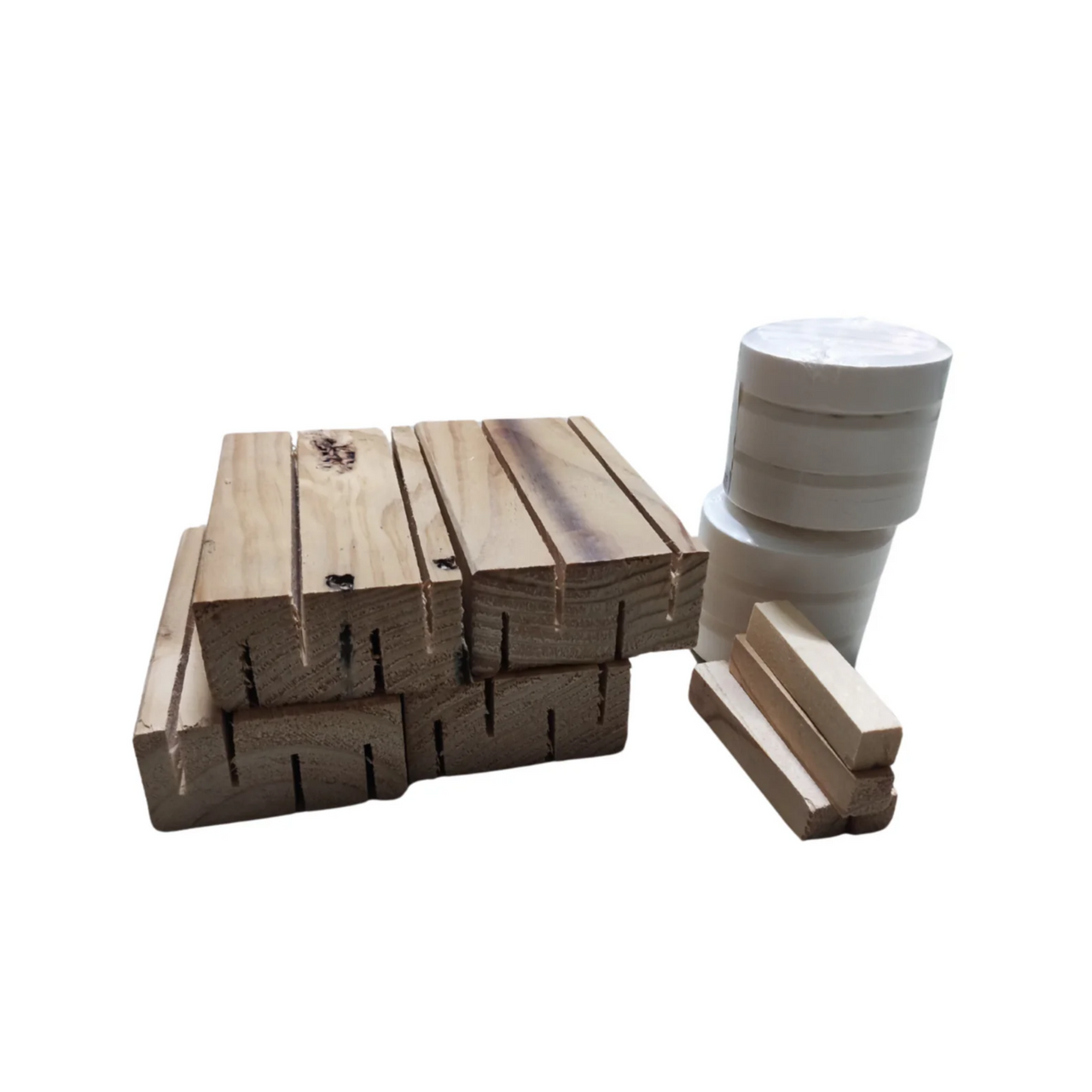
Using cellulose baits and a termite baiting system can be an effective, long-term solution against a termite invasion.

Β 

EnviroBug blog and resources

You may be interested in...

Products

sale
Termite Ninja - Ultimate DIY Termite Eradication System - Envirobug
Termite Ninja - Ultimate DIY Termite Eradication System from $297.00 $891.00
Get professional grade protection – but save 80% to 90% vs. paying an exterminator (Save over $4,000 for a large house) How Does the Termite Ninja Stack Up? Termite Ninja Traditional Exterminator Setup cost One-off kit purchase $2,000–$5,000+ treatment Annual monitoring $0 β€” you do it yourself $900+ per inspection Treatment cost Cost of killer bait only $2,000–$4,000+ Chemicals APVMA-approved IGR β€” harmless to humans and animals Often broad-spectrum soil chemicals - these can be toxic to both humans and pets. Flexibility Walls, ground, in-ground, stumps, patios Ground-only in most systems Lock-in None β€” your system, your schedule Annual contracts standard Termites cause more damage to Australian homes than fires, floods and storms combined β€” and the traditional answer is an exterminator who charges $900 a year just to look around and thousands more to treat. The Termite Ninja changes that equation entirely. Professional-grade monitoring, attraction and colony eradication β€” installed by you in minutes, owned by you permanently, with no ongoing fees and no locked-in contracts. We've never had a kit returned. Not one in 18 years. Safe for families. Devastating for colonies. APVMA-approved, harmless to humans and pets β€” catastrophic for the colony. Where Can I Install It? Termite Ninja is the only system that allows you to directly install termite bait stations to monitor and treat termites anywhere – not just on the ground. On walls β€” where mud tubes or damage is visible On the ground β€” around the full perimeter of your home In the ground β€” buried in-ground stations for perimeter interception On stumps β€” a favourite entry point for subterranean termites On patios and hardstand β€” anywhere termites have been spotted or are likely to travel. Why Choose Envirobug DIY Termite Ninja Multi-purpose Termite Control Monitor Bait Stations Compared With Others? Β  The Flexibility of Termite Ninja Monitor Bait Traps Compared With Other Traps: Β Β Β Β  How It Works The Termite Ninja runs on three phases: 1. Monitor β€” Specially prepared bait stations containing fresh wood and pure cellulose tablets are installed around your property's perimeter and anywhere termite activity is suspected. Termites are hardwired to seek cellulose. They find your stations before they find your home. 2. Detect β€” Check each station through the clear viewing window without touching or opening it. No disturbance, no false alarms, no tools. Just look. 3. Eradicate β€” When activity is confirmed, use the innovative stacking system to apply killer bait directly above the active station without scaring off the feeding termites. Workers carry chlorfluazuron IGR (a safe, non-toxic growth inhibitor) back to the nest, share it through natural colony behaviour, and the queen dies. Colony collapse follows. No guessing. No approximation. Bait applied directly where termites are active β€” like a ninja, right to the source. And they never saw it coming. Key Features Install Anywhere Termites Go β€” The only DIY system that lets you place bait stations on walls, on the ground, in the ground, on stumps and on patios. Not just ground-level. Everywhere termites travel. Saves Up to 80–90% vs. Professional Treatment β€” A large home can save over $4,000 in treatment costs and $900 every single year in inspection fees. The kit pays for itself almost immediately. Stacking System β€” The Game Changer β€” The innovative stacking design lets you apply killer bait directly above an active station without opening it or disturbing the termites feeding inside. This is the detail that makes the difference between termites staying and termites leaving. Clear Viewing Window β€” Monitor every station with a visual check, no tools, no disturbance. See exactly what's happening inside without touching a thing. Ant-Proof Design β€” Specifically designed to exclude ants. What you find inside is termites β€” not a false positive colony of black ants that wasted your time. Reusable Tough ABS Plastic β€” Built to last years of outdoor exposure, ground contact and weather. Can Be Painted to Match Your Home β€” Wall-mounted stations blend into your exterior. No eyesore, no visible pest control hardware on your facade. Everything Included β€” Full complement of cellulose attractant and killer bait powder included with your kit. Step-by-step installation guide and video delivered immediately by email after purchase. Safe. APVMA Approved. β€” Chlorfluazuron IGR at 1% per kg of pure cellulose. Completely harmless to humans, kids, pets and native wildlife. Devastating to termites. What's in the Kit Every kit contains all of these components - see the below table for the number of each included with each kit size: Termite Ninja multi-purpose ABS bait stations All assembly components β€” ready to install out of the box An equal number of specially prepared timber attractant and cellulose tablets - to attract termites Chlorfluazuron IGR Killer Bait powder sachet/s - to kill termites Immediate email delivery of step-by-step installation guide and video tutorials Additional attractant tablets and killer bait powder available separately as needed. Package Includes 4 Station 12 Station 18 Station 24 Station 36 Station Bait Station Boxes 4 12 18 24 36 Lid Kits 4 12 18 24 36 Indicator Dowels 4 12 18 24 36 Cellulose Bait Tablets 4 12 18 24 36 Wooden Termite Baits 4 12 18 24 36 Killer Bait Powder Treatments 1 2 3 4 5 User Manual βœ“ βœ“ βœ“ βœ“ βœ“ Phone & Email Support βœ“ βœ“ βœ“ βœ“ βœ“ Not sure which size to choose? Measure your perimeter in metres and divide by three β€” that's your minimum station count. Add one or two spares for killer bait treatments. When in doubt, size up. A gap in your perimeter is the only thing a termite needs.
Quick View
sale
Pure Cellulose Termite Bait Unit Attractant - Envirobug
Pure Cellulose Termite Attractant Tablets from $25.00 $50.00
Your Termite Ninja stations work because termites find the bait inside them impossible to ignore. Pure cellulose is the gold standard termite attractant β€” the same material their colonies depend on for survival. These replacement tablets keep every station in your perimeter fresh, active and drawing termites toward your system and away from your walls, floors or joinery. Why Pure Cellulose? Not all timber attractants are equal. Pure cellulose tablets are specifically processed to maximise termite attraction β€” stripped of the resins and compounds that might deter feeding, leaving only what termites are hardwired to seek out. It's the most attractive form of cellulose you can put in a station, and that distinction matters when your home is what you're protecting. Cellulose attractant tablets only β€” killer bait powder and Termite Ninja stations sold separately. Shop Killer Bait Powder here. Shop the Termite Ninja System here.Β  Key Features Maximum Attraction. Minimum Interference. β€” Pure cellulose tablets contain nothing that deters feeding β€” no resins, no preservatives, no compounds that signal danger to a foraging termite. Just irresistible attractant, working around the clock. Keeps Your Perimeter Hot Year-Round β€” Fresh tablets restore every station's drawing power the moment they're installed. An active, stocked perimeter pulls termites toward your system β€” not toward your home. No Active Chemicals. Safe for Everyone. β€” Pure attractant only, with no toxins, no poisons and no risk to humans, kids, pets or native wildlife.Β  Available in 3, 6, 9 and 12 Packs β€” Match your pack size to the number of stations you're running. Works Seamlessly with the Full Termite Ninja System β€” Drop-in replacement for ground, wall, stump, in-ground and patio stations. When to Replace Your Tablets Tablets inside a station appear consumed, reduced or dried out It has been 3–6 months since your last replacement depending on activity level You're heading into spring and summer when termite foraging intensifies A station has just been treated with killer bait and you're returning it to monitoring mode Tip: After confirming colony collapse following a killer bait treatment, replace tablets and return the station to monitoring mode immediately. Even though a collapsed colony won’t come back, neighbouring termite colonies can move into vacated territory β€” a restocked, active perimeter keeps them from claiming it. How to Replace Your Tablets Check each station through the clear viewing window before opening Open only inactive stations β€” never disturb a station showing active termite feeding Remove spent or exhausted tablets from the station housing Insert fresh cellulose tablets from your refill pack Close and return the station to its installed position Monitor regularly β€” check weekly or fortnightly if you have an infestation. Check every 4–8 weeks in active season, every 8–12 weeks in cooler months
Quick View
sale
DIY Termite Killer Bait Powder Replacement - Envirobug
Termite Ninja - Killer Bait Powder Replacement from $75.00 $322.00
You've spotted termite activity in your Termite Ninja station. Now you need the one thing that takes a detection event and turns it into a colony collapse. This is the APVMA-approved killer bait powder that worker termites consume, carry back to the nest and share β€” all the way to the queen. No poisons. No chemicals harmful to humans or animals. Just a growth regulator that shuts the colony down from the inside out. Killer bait only β€” Termite Ninja stations sold separately. Shop the Termite Ninja DIY System here.Β  How the Bait Works The killer bait contains chlorfluazuron β€” a termite growth regulator (IGR) at 1% per kg of pure cellulose. Worker termites consume it, but it doesn't kill them instantly. Instead it weakens their jaw structure, rendering them unable to eat. As food becomes scarce in the colony, termites turn cannibalistic β€” and the living termites begin consuming those that have already ingested the growth regulator. The IGR passes vertically through the colony, termite to termite, until it reaches the queen. Colony collapse follows. This is the same mechanism professional exterminators use β€” without the thousands of dollars in fees, the annual contracts, or the chemical soil treatments. Key Features Takes Out the Whole Colony, Not Just What You Can See β€” Growth regulator passes from termite to termite through natural colony behaviour, ultimately reaching and eliminating the queen. One application, complete eradication. The Same Active Ingredient Professionals Use β€” APVMA-approved chlorfluazuron IGR at professional strength. No watered-down DIY formula β€” the real thing, available to you directly. Safe for Humans, Pets and Native Wildlife β€” Chlorfluazuron is specifically targeted at termite biology. Completely harmless to humans, animals and the broader environment at the rate used. No Use-By Date β€” Provided it's kept sealed and dry, this bait has an indefinite shelf life. Stock up without worrying about waste. Available in 2, 5 or 10 Packs β€” 100g per sachet. Match your pack size to the scale of activity across your Termite Ninja stations. Designed for the Termite Ninja Stacking System β€” Applied via EnviroBug's innovative stacking method, which places the bait directly above an active station without disturbing the termites inside β€” critical for keeping them feeding. When to Apply the Killer Bait Apply Killer Bait as soon as you observe termite activity inside a Termite Ninja station β€” indicated by mud tubes, frass, or visible termite presence through the clear monitoring window.Β  Tip: Speed matters once you've detected activity. The sooner the bait is applied, the sooner worker termites begin carrying it back to the colony. Don't wait for activity to intensify before acting. How to Apply Confirm activity β€” Check your station's clear viewing window for signs of termite presence Assemble a treatment station β€” Prepare a new Termite Ninja station with a sachet of Killer Bait inside Stack it on top β€” Place the treatment station directly above the active one using the stacking system β€” this delivers bait without opening or disturbing the active station Monitor regularly β€” Check every 1–2 weeks for ongoing activity and reapply if needed Look for colony collapse β€” Activity will slow and eventually cease as the IGR works through the colony to the queen
Quick View
Termite Ninja Refill Packs - Envirobug
Termite Ninja - Attractant Refill Packs from $69.00
You've already done the hard work β€” your Termite Ninja stations are in the ground, on the walls, around the perimeter. Now all you need is fresh timber bait to keep them actively attracting. These refill packs give you everything required to restock your monitoring stations and keep your perimeter working year-round, without calling an exterminator or paying for a single inspection. Timber attractant refill only β€” killer bait and Termite Ninja stations sold separately. Shop Killer Bait Powder here. Shop the Termite Ninja System here.Β  Why Keep Your Stations Stocked? An empty or exhausted bait station is a station that isn't attracting. Termites need a live, active timber bait source to be drawn in and begin feeding β€” once the bait is consumed or dried out, your station becomes passive. Regular restocking keeps every station in your perimeter hot, active and pulling termites toward your detection system rather than toward your home. Key Features Keeps Your Perimeter Active and Attracting β€” Fresh specially prepared timber bait restores your stations' drawing power, ensuring termites are lured toward your system before they find their way into your walls, floors or stumps. No Exterminator. No Inspection Fee. Ever. β€” Restock your own stations in minutes. No contractor, no annual inspection contract, no $900 fee just to check what you can check yourself through the clear viewing window. Specially Prepared Timber Bait β€” EnviroBug's recycled timber bait is specifically prepared to be irresistible to termites β€” not just any wood. It's the right material, prepared the right way, to maximise attraction in every station. Compatible with the Full Termite Ninja System β€” Designed exclusively for EnviroBug Termite Ninja bait stations. Drop-in replacement that works seamlessly with your existing setup β€” ground, wall, stump and in-ground stations. Safe for Humans, Pets and Native Wildlife β€” Pure cellulose timber bait with no active chemicals in the monitoring phase. Nothing toxic, nothing harmful β€” just a timber attractant that termites can't resist. Available in Multiple Pack Sizes β€” Match your pack size to the number of stations you're running. Keep spares on hand. When to Restock Your Stations Separate to monthly checks for termite activity, you should thoroughly check your stations every 3–6 months by opening them up and looking at the state of the wooden and cellulose tablet baits. This is especially the case as you're heading into warmer months (when termite activity peaks). Specifically, you should replace your baits when: The timber bait or cellulose tablets inside the station appear consumed, reduced or has got wet You've recently treated an active station and want to return it to monitoring mode Tip: After a successful treatment with killer bait and confirmed colony collapse, restock your stations with fresh timber attractant, cellulose tablets and return them to monitoring mode β€” termites from neighbouring colonies can move in to fill the territory within 12 months. How to Restock Your Stations Check each station through the clear viewing window for signs of activity before restocking Open inactive stations that show no current termite presence Remove spent or exhausted timber bait and replace with fresh attractant from your refill pack Close and return the station to its installed position Monitor regularly β€” every 4–8 weeks during active season, every 8–12 weeks in cooler months
Quick View

Designed for Australian Conditions

Eco-friendly

No poisons

12 month warranty

30 Day

satisfaction guarantee

Afterpay American Express Apple Pay Google Pay Shop Pay Visa Mastercard