Australian mouse plague: causes, history and prevention steps

mouse plague

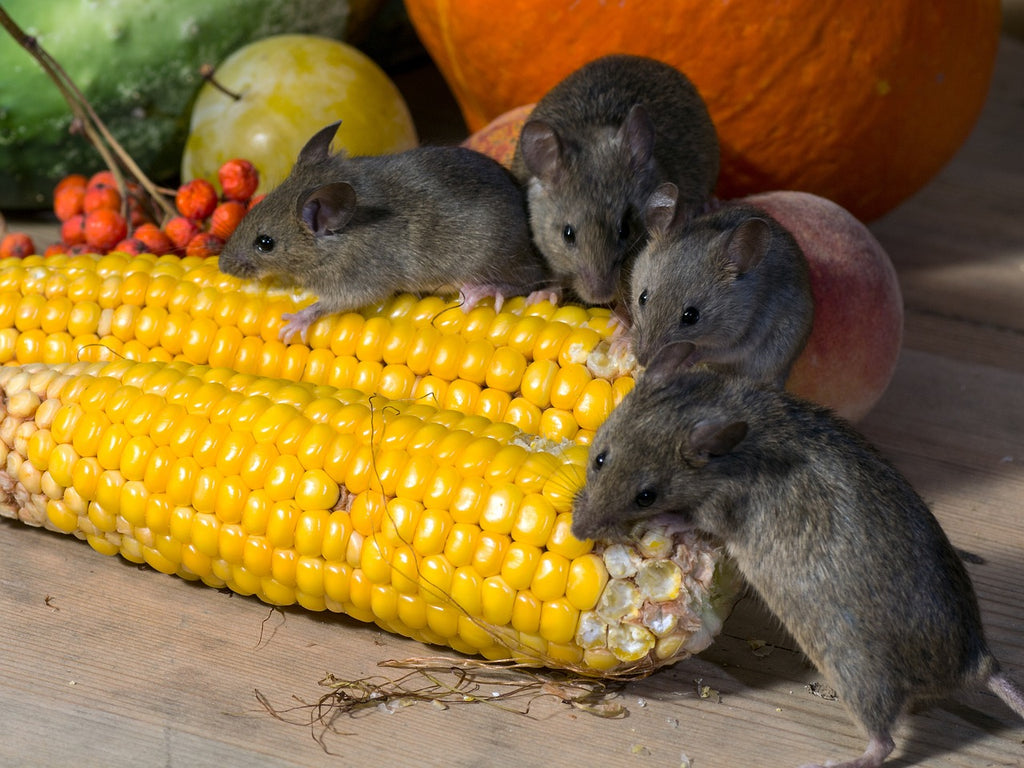
When the world was in the clutches of COVID-19, Mouse Plague Australia had a case of double trouble. During mid 2020, parts of Queensland and New South Wales were hit by what can be called a “Mouse Plague”. Record numbers of mice (By definition, around 800 mice per hectare is termed as a “plague”.) were invading homes, and the plague continued till 2021. Mice Plague Australia intruded people’s homes, disrupted farming, destroyed produce and even went to the extent of nicking food from shelves in supermarkets. 

The La Nina events continue and an increase in mice plagues are going to be a feature 

Mice plague in Australia go back a long time in history. The earliest plagues in Australia can be traced back to the 19th century, and by the 20th century, mouse plagues became a common scenario in Australia which would break out in every 5 to 10 years. 

Mice Epidemic Australia Timeline

1788

Arrival of mice as stowaways with the first fleet of the British colonists.

1871

Localised plague around Walgett in New South Wales.

1872

Mouse plague near Saddleworth in South Australia.

1880

A plague of mice was noted along an area of the Goulburn River.

1890

South Australia experienced another plague in the Mid North region in areas around Oladdie, Mundoora and Georgetown.

1904

Further plagues occurred in parts of New South Wales including Condobolin and other parts of the Lachlan River and around Moree, New South Wales extending all the way to coastal areas.

1917

The plague of 1917 was one of the largest mouse plagues in Australia that occurred on and around the Darling Downs area of Queensland, areas around Beulah, Campbells Creek and Willenabrina in Victoria and parts of South Australia including Balaklava. Eventually mice reached the Goldfields-Esperance and Wheatbelt regions of Western Australia.

1918

More incidences of plagues occurred in 1918 in parts of Victoria and New South Wales.

1922

Areas around Dubbo, New South Wales and Tamworth in New South Wales were hit again.

1925

Another plague followed through the Riverina.

1928

Mice struck again in parts of Queensland around Warwick.

1932

Further plagues occurred around Wimmera in Victoria, Loxton in South Australia and Winton in Queensland. More were recorded in parts of New South Wales in 1932 including Culgoa and Parkes.

1952

Parts of Victoria and South Australia were struck by mouse plagues.

1955

Areas in New South Wales and Queensland were hit by mouse plagues.

1956

Parts of the Eyre Peninsula in South Australia experienced the worst mouse plague the area had known.

1967

Parts of outback New South Wales around Bourke were hit by plagues of mice.

1972

Parts of Queensland were hit by mouse plagues.

1975

Parts of Victoria and New South Wales were hit by mouse plagues.

1979 - 1980

A plague in Victoria cost farmers A$15 million in lost crops and damaged machinery.

1993

Australia's worst ever mouse plague occurred and caused an estimated A$96 million worth of damage to crops and attacked livestock in piggeries and poultry farms. They also destroyed rubber and electrical insulation, damaged farm vehicles, and ruined cars and buildings.

1994

A mouse plague affected parts of New South Wales, the Australian Capital Territory, South Australia and northern Victoria.

2011

Mouse numbers built to plague numbers in early 2011 in southern Queensland, through New South Wales, western Victoria and South Australia spreading to the Nullarbor Plain region of Western Australia in late 2011.

Mid 2020 - 2021

A mouse plague affecting parts of Queensland and New South Wales began in mid-2020 and continued into 2021.


What Caused the Mouse Plague in Australia
Australian mouse plague

The odds were in favour of mice when Australia saw heavy rainfall after a prolonged period of drought and wildfire. The rain brought good tidings, enhanced the growth of natural life and agricultural produce subsequently. However, these conditions were not only favorable to humans, but also to mice. 

Swarms of mice migrated to areas with more than enough food to go around, providing optimal conditions for them to reproduce exponentially. The numbers grew, and the threshold reached plague numbers. 

Effects of the Mouse Plague

Mice are pests and with pests come peril. A general mind map of the mouse plague would represent destruction of crops, machinery, farmlands and so on. 

Often, the degree of infestation worsens, and mice will start ravaging homes too. During the plague that began in mid 2020, reports were made of mice biting people in their beds in hospitals, destroying wires and other home equipment and even leaving a mess of their faeces and urine in empty homes. Wellington Correctional Centre had to evacuate all inmates and staff because of health concerns and safety, as mice invaded the centre. 

A supermarket in Gulargambone (382 km north west of Sydney) reported that mice were stripping food off the supermarket’s shelves. The estimated loss was $100 million worth of crops, and other damages.

Mice are known to carry and spread more or less 60 kinds of severe diseases. Thus, a mouse plague comes with medical burden. 

Moreover, as the mice scurried around people’s properties, people started applying any mouse repellent they could get their hands on. These would include poisons, baits and industrial chemical repellents. Supermarkets were running short of baits, people were improvising and coming up with home solutions. At one point, the Australian Pesticides and Veterinary Medicines Authority declined permits for a mouse killing chemical called bromadiolone. This was inevitable, because although bromadiolone was getting rid of mice, it was getting into the food chain through hunters that prey on dead mice, leading to collateral damages to the environment.  

Mouse Plague Preparedness: What Can You Do?

Preparedness against mouse plagues is mostly about early prevention steps. Plagues take us by surprise, and are often driven by unpredictable weather and climate conditions. But, if we take some precautionary measures, we may be able to minimise the loss if not completely mitigate it.  

  • Look for early signs of mouse infestations inside and outside your home, commercial space and farmlands.
  • Install mouse-proof construction.
  • Get rid of holes, burrows, cracks and gaps where mice could build nests.
  • Keep your surroundings clean, and make your household and commercial space less inviting to mice.
  • Get your plumbing checked regularly for leaks. Mice love to nest in dark, moist environments, so presence of leaks in pipes may provide them with a good shelter spot.

  • Using chemicals and poisons to kill and bait mice is not a safe way to eliminate them. 

    To begin with, handling hazardous chemicals requires expertise. Secondly, this process of getting rid of mice is rather inhumane and thirdly, getting rid of the mess that you are left with when the mice die all around your property is troublesome and takes a toll. 

    To add to that, although the poisons are intended for mice, they are not specifically designed to kill just mice. During the 2021 mouse plague, health concerns for people were raised when mice killed by baits were found in drinking water tanks. These chemicals may remain active for months, be consumed by other animals (including your pets) and go on to kill them. In this case, to prevent mice from coming inside your property, you can use Ultrasonic Mice Repellents that keep mice away entirely from coming near your home by emitting ultrasonic waves that irritate mice and other pests alike. Ultrasonic Mice Repellents are in fact, eco-friendly and pet friendly, and because they don’t use any harmful chemicals, they are perfectly safe. 

    The next mouse plague could break out any moment, especially with the recurrent flooding we are having,  and take you by surprise. In this regard, taking some early prevention steps may give you an edge over intruding mice. 

    Products

    sale
    The Commercial Command Pack - Envirobug
    Stealthy 360° Ultrasonic Pest Repeller (4th Generation) from $59.00 $79.99
    Drive pests out safely, contactless and hassle-free. Ultrasonic waves repel without traps or toxins. Rodent baits kill owls and other natives via secondary poisoning. Go ultrasonic: the Stealthy 360° (4th Generation) blasts cycling state-of-the-art high-frequency ultrasonic and electromagnetic sound waves across full rooms that only small pests can hear. It will irritate rats, mice and small possums and get them to leave. USB or 240V powered, silent operation or modes with sound for big pests. Covers 370 sqm in open spaces - garages, homes, sheds. Pet-safe, no mess, Aussie-tested. Prevention Pays Off Prevention beats poison — every time. And protects biodiversity. Rats and mice target indoor warmth, food scraps, nests. Act first: seal gaps, tidy pantries, deny access. Ultrasonics drive them out before infestations — no rotting carcasses in walls or behind appliances. Avoid the horror and the smell! Protect your home, poison-free. Key Features 360° ultrasonic blast: Full-circle waves repel rodents, rats, mice, small possums. Triple disruption: Choose your mode - Ultrasonic, pressure, electromagnetic waves. Strobe scare option: Flashing lights startle pests visually. Massive coverage: Up to 370 sqm in open indoor spaces. Dual power: USB or 240V AU plug for flexibility. Multi-mode power: Stealth ultrasonic or audible for tough jobs. Clear indicator: Operation light shows active status. 3 versatile modes: Tailored for rodents, insects, spiders. Power-smart: Low running cost. Pet-safe: Harmless to cats & dogs. Energy-efficient: Low power usage. Compact build: Fits anywhere indoors. 12-month warranty: Aussie-proven reliability.
    Quick View
    -16% sale
    The Family-Sized Fortification - Envirobug
    Garden Guardian – Solar Powered Ultrasonic Animal Repeller $79.00 $93.00
    Uninvited animals don't keep business hours — and neither does the Garden Guardian. This solar-powered, motion-activated repeller works around the clock to drive off possums, cats, rabbits, birds, foxes, wallabies, deers, ducks  and more with high-frequency ultrasonic pulses and a startling flash of light. No poisons. No traps. No suffering. Just your garden, protected day and night. Why Garden Guardian? Most pest problems happen after dark, which is exactly when you're not out there watching. The Garden Guardian's infrared motion sensor detects the heat signatures of approaching animals and fires instantly — a burst of ultrasonic sound and flashing LED that sends them packing before they reach your garden beds, pool, chicken coop or veggie patch. It recharges itself during the day so it's always ready to go, day or night. Key Features Stops Pests Before They Strike — IR motion sensor detects animal heat signatures instantly and fires ultrasonic pulses + flashing LED the moment something approaches. Reactive defence, not passive hoping. No Power Bills. Ever. — Runs entirely on solar with rechargeable NiMH battery backup. Plant it, forget it — it recharges itself while you sleep. Safe for Your Family. Unbearable for Pests. — 25–61 kHz ultrasonic frequency drives target animals away fast. Covers What Matters Most — Up to 10 metres of targeted protection across garden beds, veggie patches, pool surrounds and chicken coops. Point it where pests enter. Built for Australian Conditions — IPX65 weather-resistant, UV-stabilised polyethylene that handles rain, heat and full sun without flinching. No babysitting required. Protect Your Garden Without Poisoning It — Humane, chemical-free deterrence. Your native wildlife, pets and kids are safe. Pests are not welcome. Up and Running in Minutes — No tools, no wiring, no electrician. Stake it in, switch it on, done. We've Got Your Back — 12-month warranty with fast, local Aussie customer service. 
    Quick View
    sale
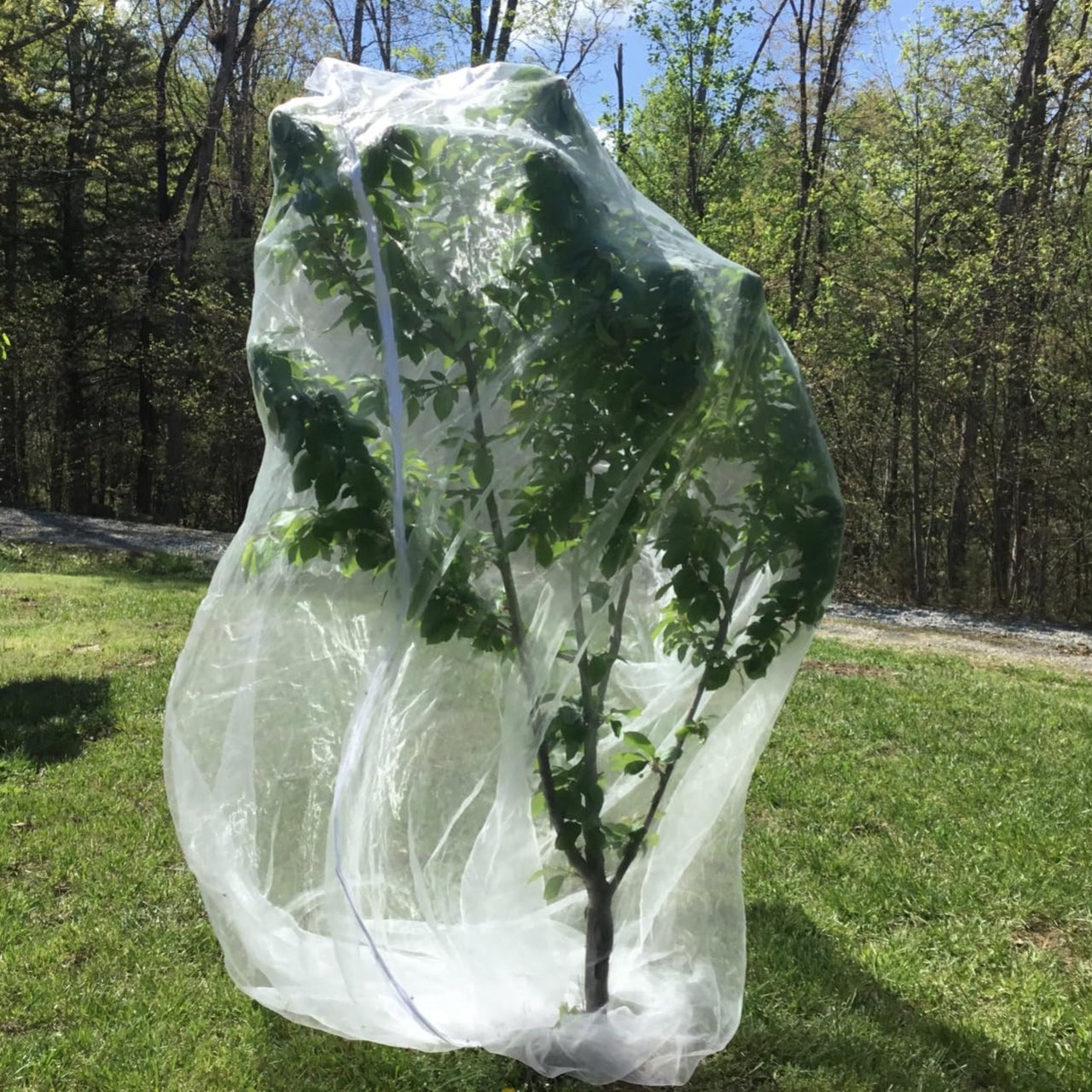
    EnviroBug Tree Defender – Fruit Tree Netting for Bird and Insect - Envirobug
    Tree Defender – Fruit Tree Netting for Bird and Insects from $24.00 $29.00
    Harvest Without Harm  Our netting is compliant with wildlife regulations across Australia, so you can protect your fruit while also protecting our native wildlife! Protect your fruit and local wildlife at the same time with EnviroBug Tree Defender netting. Designed to help keep birds and insects away from your trees, it creates a simple physical barrier that helps safeguard blossoms, fruit and new growth without poisons or sprays. Birds and insects can damage fruit trees by eating fruit, breaking branches, stripping leaves or boring into the tree itself. Once fruit is damaged, it often falls early and can rot on the ground, while more serious damage can weaken the tree and affect future harvests. The best way to protect fruit trees is to stop pests from reaching them in the first place.  EnviroBug’s fine mesh netting helps block access while still allowing sunlight and moisture through, making it a practical, all-season solution for gardeners who want strong protection without harming native wildlife. Key Benefits Ultra-fine mesh protection (20D mesh). Helps keep birds, fruit flies, snails and other pests off your fruit while still letting sunlight and moisture through. Built to last. UV-stabilised polyethylene helps the net stand up to harsh sun and everyday garden use. Snug drawstring closure. Creates a secure fit around the trunk to help stop pests getting in underneath. Zippered access. Makes it easy to check, care for, and harvest your tree without removing the whole net. Uses for the Fruit Tree Netting EnviroBug’s Tree Defender is ideal for protecting fruit trees while they’re producing and vulnerable to birds, insects and other pests. It creates a physical barrier that helps keep your harvest intact without poisons, sprays or constant intervention. It’s also a smart choice for young trees, where tender growth can be more easily damaged. Using netting early helps protect developing trees while they establish, giving them a better chance to grow strong. Specific Recommendations For best results, install the netting after flowering, just as your fruit is starting to form. As our netting is insect proof, installing too early can prevent pollinators from accessing your flowers.  It’s also worth checking the net regularly, especially after garden work or windy conditions. A quick inspection helps you catch any movement or damage and make sure the net is still covering the tree properly.
    Quick View
    sale
    Termite Ninja - Ultimate DIY Termite Eradication System - Envirobug
    Termite Ninja - Ultimate DIY Termite Eradication System from $297.00 $891.00
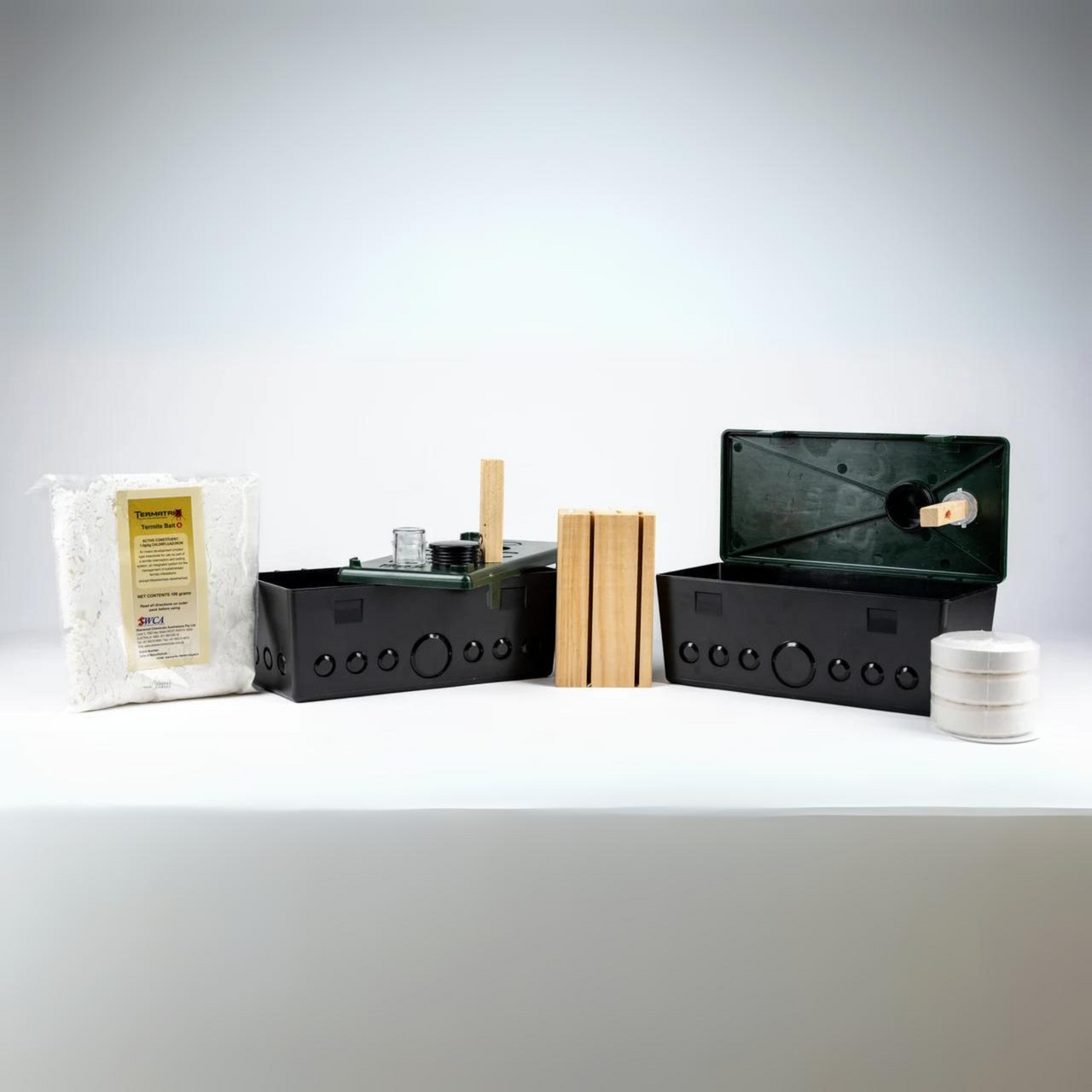
    Get professional grade protection – but save 80% to 90% vs. paying an exterminator (Save over $4,000 for a large house) How Does the Termite Ninja Stack Up? Termite Ninja Traditional Exterminator Setup cost One-off kit purchase $2,000–$5,000+ treatment Annual monitoring $0 — you do it yourself $900+ per inspection Treatment cost Cost of killer bait only $2,000–$4,000+ Chemicals APVMA-approved IGR — harmless to humans and animals Often broad-spectrum soil chemicals - these can be toxic to both humans and pets. Flexibility Walls, ground, in-ground, stumps, patios Ground-only in most systems Lock-in None — your system, your schedule Annual contracts standard Termites cause more damage to Australian homes than fires, floods and storms combined — and the traditional answer is an exterminator who charges $900 a year just to look around and thousands more to treat. The Termite Ninja changes that equation entirely. Professional-grade monitoring, attraction and colony eradication — installed by you in minutes, owned by you permanently, with no ongoing fees and no locked-in contracts. We've never had a kit returned. Not one in 18 years. Safe for families. Devastating for colonies. APVMA-approved, harmless to humans and pets — catastrophic for the colony. Where Can I Install It? Termite Ninja is the only system that allows you to directly install termite bait stations to monitor and treat termites anywhere – not just on the ground. On walls — where mud tubes or damage is visible On the ground — around the full perimeter of your home In the ground — buried in-ground stations for perimeter interception On stumps — a favourite entry point for subterranean termites On patios and hardstand — anywhere termites have been spotted or are likely to travel. Why Choose Envirobug DIY Termite Ninja Multi-purpose Termite Control Monitor Bait Stations Compared With Others?   The Flexibility of Termite Ninja Monitor Bait Traps Compared With Other Traps:      How It Works The Termite Ninja runs on three phases: 1. Monitor — Specially prepared bait stations containing fresh wood and pure cellulose tablets are installed around your property's perimeter and anywhere termite activity is suspected. Termites are hardwired to seek cellulose. They find your stations before they find your home. 2. Detect — Check each station through the clear viewing window without touching or opening it. No disturbance, no false alarms, no tools. Just look. 3. Eradicate — When activity is confirmed, use the innovative stacking system to apply killer bait directly above the active station without scaring off the feeding termites. Workers carry chlorfluazuron IGR (a safe, non-toxic growth inhibitor) back to the nest, share it through natural colony behaviour, and the queen dies. Colony collapse follows. No guessing. No approximation. Bait applied directly where termites are active — like a ninja, right to the source. And they never saw it coming. Key Features Install Anywhere Termites Go — The only DIY system that lets you place bait stations on walls, on the ground, in the ground, on stumps and on patios. Not just ground-level. Everywhere termites travel. Saves Up to 80–90% vs. Professional Treatment — A large home can save over $4,000 in treatment costs and $900 every single year in inspection fees. The kit pays for itself almost immediately. Stacking System — The Game Changer — The innovative stacking design lets you apply killer bait directly above an active station without opening it or disturbing the termites feeding inside. This is the detail that makes the difference between termites staying and termites leaving. Clear Viewing Window — Monitor every station with a visual check, no tools, no disturbance. See exactly what's happening inside without touching a thing. Ant-Proof Design — Specifically designed to exclude ants. What you find inside is termites — not a false positive colony of black ants that wasted your time. Reusable Tough ABS Plastic — Built to last years of outdoor exposure, ground contact and weather. Can Be Painted to Match Your Home — Wall-mounted stations blend into your exterior. No eyesore, no visible pest control hardware on your facade. Everything Included — Full complement of cellulose attractant and killer bait powder included with your kit. Step-by-step installation guide and video delivered immediately by email after purchase. Safe. APVMA Approved. — Chlorfluazuron IGR at 1% per kg of pure cellulose. Completely harmless to humans, kids, pets and native wildlife. Devastating to termites. What's in the Kit Every kit contains all of these components - see the below table for the number of each included with each kit size: Termite Ninja multi-purpose ABS bait stations All assembly components — ready to install out of the box An equal number of specially prepared timber attractant and cellulose tablets - to attract termites Chlorfluazuron IGR Killer Bait powder sachet/s - to kill termites Immediate email delivery of step-by-step installation guide and video tutorials Additional attractant tablets and killer bait powder available separately as needed. Package Includes 4 Station 12 Station 18 Station 24 Station 36 Station Bait Station Boxes 4 12 18 24 36 Lid Kits 4 12 18 24 36 Indicator Dowels 4 12 18 24 36 Cellulose Bait Tablets 4 12 18 24 36 Wooden Termite Baits 4 12 18 24 36 Killer Bait Powder Treatments 1 2 3 4 5 User Manual ✓ ✓ ✓ ✓ ✓ Phone & Email Support ✓ ✓ ✓ ✓ ✓ Not sure which size to choose? Measure your perimeter in metres and divide by three — that's your minimum station count. Add one or two spares for killer bait treatments. When in doubt, size up. A gap in your perimeter is the only thing a termite needs.
    Quick View

    Designed for Australian Conditions

    Eco-friendly

    No poisons

    12 month warranty

    30 Day

    satisfaction guarantee

    Afterpay American Express Apple Pay Google Pay Shop Pay Visa Mastercard