
If you have ever been startled by a rhythmic thumping on your roof or caught a pair of glowing eyes in your torchlight, you have encountered the mysterious world of the possum. These marsupials are nocturnal, a biological classification that describes their survival strategy. Being nocturnal means their "day" begins when yours ends; while you are settling in with a cup of tea, the possum is just beginning its morning stretches.
This evolutionary adaptation serves a variety of purposes, primarily helping them avoid the prying eyes of diurnal (daytime) predators and reducing competition for food. Nevertheless, this lifestyle choice leads to a natural curiosity for homeowners: if they are so active and loud under the cover of darkness, where exactly do they vanish to when the sun rises? In this article, we explore the intricate details of possum behaviour, their preferred daytime sanctuaries, and how to tell if one has decided to share your mortgage.

Possum Homes
To understand where a possum goes, we must first understand how they manage their time. Possums are creatures of habit, governed by a surprisingly rigid internal clock. Biological studies have revealed that these animals do not simply wander aimlessly; they follow a strict regimen of maintenance, foraging, and rest.
Sleeping is the dominant activity in a possum’s life. They are champions of the long nap, often spending over ten hours tucked away from the world. Be that as it may, this ten-hour block is not necessarily a deep, uninterrupted slumber. Possums are light sleepers; they may shift positions, engage in a quick bout of grooming to rid themselves of parasites, or briefly survey their surroundings if a strange noise disturbs their peace.
One of the most interesting aspects of their home life is their loyalty to a specific sleeping location. While they might have several backup dens within their territory, they generally do not commute between different spots during a single sleep cycle. Once they have settled in for the day, that is where they intend to stay until the sun dips below the horizon. This dedication to a single spot makes the selection of a den a high-stakes decision for the animal.
Furthermore, the two hours spent on grooming are vital for their survival. In the wild, keeping their fur clean and free of ticks or mites ensures they stay insulated against the cold nights and prevents skin infections that could prove fatal. This meticulous self-care is often what you hear if you listen closely to a ceiling space during the quiet hours of the night—a soft, rhythmic scratching as they comb through their thick fur.
Where do Possums Live During the Day?
During the night, the world is a playground. Possums are agile climbers. They move with remarkable speed, leaping from branch to branch to avoid the ground. This isn't just for fun; it is a life-saving behaviour. Their primary predators—dogs, foxes and dingoes—are largely terrestrial. By staying in the heights, the possum maintains a significant tactical advantage.
When the sun rises, though, a different set of challenges emerges. To survive the daylight hours, the possum requires a den. A den is more than just a bed; it is a fortress. In the wild, a suitable den must be dark, dry and inaccessible to predators. Possums prefer shelter that is off the ground, however common natural locations can include:
-
Hollow Tree Branches: Old-growth trees provide the perfect cavities for a curled-up marsupial.
-
Tree Trunks: Vertical hollows within the main body of a tree offer excellent insulation.
-
Fallen Logs: If a tree is large enough, a hollow log on the forest floor provides a sturdy, albeit lower-altitude, retreat.
-
Rock Cavities: In bushland areas, deep crevices in rock faces offer cool protection from the heat.
-
Termite Mounds: In certain climates, possums have been known to hollow out sections of large termite mounds, which provide incredible thermal stability.
In suburban settings, conversely, nature is often replaced by human architecture. Possums are highly adaptable and have recognised that the roof cavities and attics of our homes are essentially artificial hollow logs. These spaces are dark, warm and provide total protection from the elements.
It is also worth noting that the Brushtail Possum, one of the most common species encountered in residential areas, is a staunch introvert. They prefer to live alone. Unlike some other social animals, a Brushtail den is usually a single-occupancy residence. They do not enjoy housemates, and will vigorously defend their chosen den from other possums, often leading to the loud, guttural screeches and hissing sounds homeowners hear at 3:00 am.

Where Do Possums Go During the Daytime When Disturbed?
What happens when the safety of the den is compromised? While a possum’s den is designed to be a sanctuary, nature is rarely entirely safe. A predator might sniff out the entrance, or a human might begin a renovation project, forcing the inhabitant to flee into the bright, confusing light of day.
When a possum is disturbed during its sleep period, it enters a state of high stress. Because they are biologically tuned for nocturnal activity, their vision and reflexes are not at their peak in the midday sun. If forced to escape, the possum will struggle to find a secondary location quickly, often appearing dazed as it navigates fences or power lines.
Research into possum ecology has highlighted a sombre reality: when a possum is forcibly removed from its established territory or home, its chances of survival drop significantly. They are territorial animals; being dropped into a new area often leads to fatal confrontations with resident possums or a lack of basic knowledge regarding local food sources.
That is not to say they are entirely stubborn, however. If a den becomes uncomfortable—perhaps due to a flea infestation, the presence of a persistent predator, or even structural dampness—the possum will move house. They will quietly scout for a more suitable location nearby and sneak into their new home under the cover of night, hoping for a better night's (or day's) sleep.
Why Has a Possum Made a Den in My Home?
If you suspect you have a furry tenant, your first question is likely: "Why me?" The answer is actually a compliment to your home's maintenance. Possums are looking for the same things we are: safety, warmth and a solid roof over their heads.
Our attics and ceiling spaces are the penthouses of the animal kingdom. They are elevated, dry and often filled with insulation that makes for a very comfortable bed. Crucially, possums aren't the only ones who appreciate a good attic. Rats are equally fond of these spaces, and it is vital to distinguish between the two. While a rat is a destructive pest that can chew through electrical wiring and spread disease rapidly, a possum is a protected marsupial that requires a different management approach.
Determining who is living upstairs can be done by observing a few key signs: behaviour, sounds and the calling cards they leave behind.
Droppings
One of the most effective ways to identify your guest is to look at their waste. While it isn't the most pleasant task, the organisation of droppings is a dead giveaway.
Rats are somewhat chaotic in their habits. They tend to scatter their droppings along the runways they use to travel—typically along the edges of walls or paths leading to food. Their droppings are small, thin, and widely dispersed.
By contrast, possums are surprisingly tidy in their toilet habits. They tend to leave their droppings in concentrated clusters or small piles, usually very close to where they sleep. If you find a specific pile of pellets in a corner of your roof or near a man-hole cover, you are likely looking at a possum’s bedroom.
In addition to solids, possums have a reputation for being heavy uricators. Because they spend so much time sleeping in one spot, their urine can begin to soak into ceiling plaster or timber. This often results in:
-
Distinctive Staining: Dark, brownish stains appearing on your ceiling.
-
The Smell: A very potent, ammonia-like odour that is much stronger and more "musky" than that of a standard rodent.
If left unchecked, this can lead to permanent damage to your home’s interior, requiring expensive repairs to the plaster and paintwork.
Noises Around the Home
Strange noises at night is another major sign of a rodent infestation. Because possums can weigh up to four kilograms, they are not exactly stealthy when moving across a plasterboard ceiling.
A rat or mouse creates a skittering, scratching sound—fast, light and frantic. A possum, by comparison, sounds like a heavy-handed intruder. You will hear deliberate "thumps" and the sound of a heavy body dragging across the surface. These noises are most prevalent at dusk (when they wake up and head out for breakfast) and at dawn (when they return home for a nap).
Interestingly, you can also tell the difference by how they react to you. If you bang on the ceiling or shout, a rat will usually go dead silent, frozen by its predatory instinct to hide. A possum, on the other hand, might stop for a second, but will often simply carry on with what it was doing. They don't view humans as a primary threat in the same way a small rodent does. Some homeowners have even reported possums "knocking back" when the ceiling is tapped, showing a surprising lack of fear.
The Apple Test
If you are still unsure whether you have a rat or a possum, you can perform the "Apple Test." This is a classic method used by homeowners to identify the culprit through their eating behaviour.
-
Preparation: Place a whole, fresh apple in the area where you suspect the animal is living (usually the ceiling cavity). Ensure it is placed on a flat surface where it won't roll away. DO NOT INJECT IT WITH POISON OR ANYTHING THAT CAN KILL THE POSSUM.
-
Duration: Leave it overnight, ensuring there are no other food sources nearby.
-
Inspection: Examine the remains the following morning.
The results are usually definitive. A rodent (a mouse or rat) will nibble on the apple. You will see tiny, distinct teeth marks, and the apple will remain in the same spot, albeit looking a bit more weathered and partially eaten.
A possum, however, possesses a much larger appetite and stronger grip. A possum will often take the entire apple back to its nesting spot, or it will consume the vast majority of it in one sitting. If the apple is completely gone or looks like it has been tackled by something with a much larger jaw, you are almost certainly dealing with a possum.
How to Get Rid of Possums
While possums are fascinating creatures and a vital part of the ecosystem, having them live inside your home is far from ideal. They can cause structural damage, create unsightly stains, and their concentrated droppings can pose health risks to your family. Furthermore, the noise they generate can lead to many sleepless nights for the human residents below.
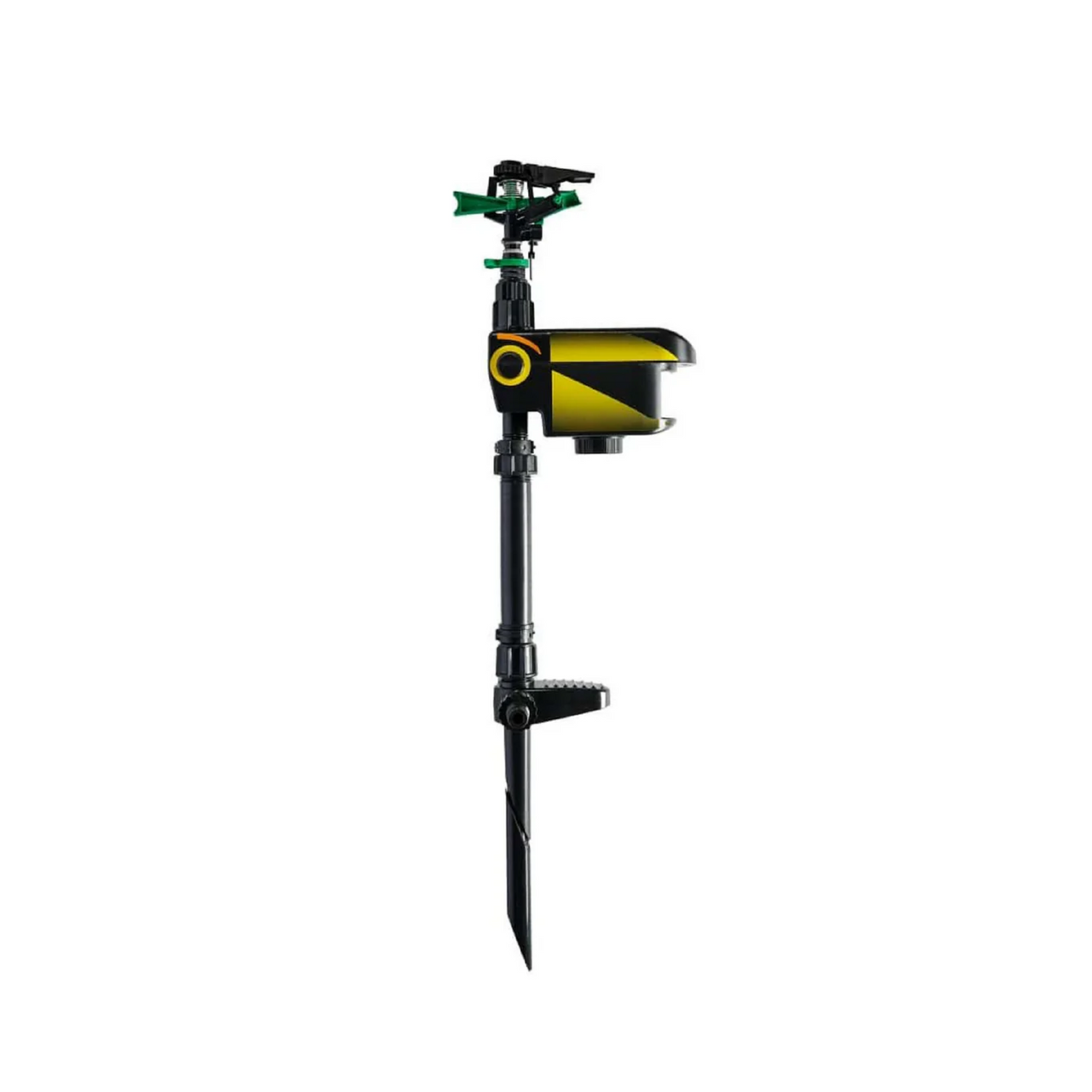
If you want to encourage your local possums to move back into the trees where they belong, deterrents are your best friend. EnviroBug’s motion-activated Garden Sentinel animal sprinkler is a brilliant, humane solution. It uses an infrared sensor to detect the body heat of a visitor and responds with a startling burst of water and noise.

The Garden Watchman Solar Animal Repeller is the heavy-duty choice for larger properties. It features a superior 13-metre detection range and a broad sensor angle, ensuring that even distant intruders are spotted well before they reach your walls. This makes it ideal for wide-open lawns and sprawling boundary lines where you need a long-range sentinel.
![Garden Watchman - Solar-Powered Pest Repeller [PRE-ORDER] - Envirobug](https://cdn.shopify.com/s/files/1/0591/7145/files/GardenWatchman_Image_1.png?v=1772687706)
Alternatively, the Garden Guardian provides 10 metres of targeted protection. It is the perfect unit for more specific zones, such as guarding a vegetable patch, a pool surround, or a narrow side path. By harnessing solar energy, both units remain active 24/7 with zero maintenance, casting a protective net that forces the possum to seek out more natural habitats.

If the problem is strictly internal, the Wireless Rechargeable Ultrasonic Pest Repeller is the ideal solution. Specifically designed for roof cavities, attics, and indoor rooms, this device emits high-frequency ultrasonic sounds that are unbearable for possums but completely silent to humans. Since it is rechargeable and wireless, you can place it in the deepest corners of your ceiling where the possum has made its den. It’s the perfect way to tell a possum that while you appreciate their company, your roof is definitely not an open-house.

Final Word: Where Do Possums Go During the Day
When dealing with possums, it is crucial to remember that we are sharing our environment with a unique and ancient lineage of Australian wildlife. In Australia, possums are protected by law under the Wildlife Act. It is illegal to kill, harm or keep them without a permit, and even relocation is strictly regulated.
The most effective way forward is to use eco-friendly, non-toxic, and sustainable solutions to deter possums. Using chemical poisons is not only illegal but also poses a massive risk to domestic pets and other native animals that might accidentally ingest the toxins.
Sustainable deterrents, like those provided by EnviroBug, focus on changing the animal's behaviour rather than causing it harm. By using solar power and ultrasonic technology, you are opting for a permanent, low-impact solution that respects the local ecosystem.


![Garden Watchman - Solar-Powered Pest Repeller [PRE-ORDER] - Envirobug](http://envirobug.com.au/cdn/shop/files/GardenWatchman_Image_1_1280x.png?v=1772687706)