
The common brushtail possum is a common sight across Australia, especially in urban areas where it has adapted well to living in homes. As such, it is now known as a common pest. But many people don’t know much about them, including their nocturnal behaviour.
In this article, we will be looking at the possum nocturnal habits and other elements that can help reduce the impact they have on the home.
Understanding Possum Behaviour

Possums are a very common group of animals that can be found across Australia. They should not be confused with opossums, which are a similar species found in the USA.
There are over 23 different possum species in Australia. The smallest, the Western Pygmy Possum (Cercartetus concinnus) is just 15 grams and the size of a mouse. In contrast, the largest are typically the size of a cat.
The two that are often found near urban settings are the Common Brushtail Possum (Trichosurus vulpecula) and the Common Ringtail Possum (Pseudocheirus peregrinus), of which the former is most common.
The species is primarily arboreal and nocturnal. During the night they come out to feed, defend their territory, and find a mate. During the day they are often found asleep in their den.
The species tend to live a very solitary life, with individuals marking territories with scent and vocalisations.
Typically the species make dens inside natural locations such as tree hollows and caves. They might also find den locations inside the roofs of buildings. While they sometimes share a den, especially in highly dense populated areas, they will normally sleep in individual dens.
There has been a slight difference noticed between those living in New Zealand, where they were introduced, and those living in Australia. In New Zealand, the species tend to have more den sites. Whether this is to reduce competition and fights is not known, but population densities in New Zealand are higher.
Brushtail possums will compete with each other, and with other species, for den space and other resources. This can lead to significant mortality in the species. Typically, when confronting another member of their species, there are few fights. Typically they will just stare at each other with erect ears. If it escalates, they will vocalise with several noises.
Nocturnal Activity Patterns
As mentioned, possums are nocturnal in nature. Therefore, they are more likely to be seen at night, as this is when they are most active. Here is a quick brief on their common behaviours during the period.
What time do possums come out at night in Australia?
Possums are very strict with their schedule. They will typically leave their den, whether a tree hollow or a roof space at the same time every day, usually just after dusk in their endless search for food.
This routine is very predictable and therefore can be used as a way for people to find out if a hole in their wall is being used by a possum for a den area. However, a possum doesn’t always use the same den. Sometimes they can have two or three dens in an area in which they rotate.
Where do possums go during the day in Australia?
The diurnal behaviour of the species is typically to sleep throughout the day. It allows them to avoid being discovered by numerous predators as well as humans. Though they might move about to go to the toilet or to eat some foraged fruits that they’ve brought back to the den.
It is very unlikely that you will see possums during the day. If they are disturbed, they can often try to flee, though this is usually to a backup den that they will have somewhere in their territory.
What time do possums go to sleep?
Possums stick to a strict routine, just like getting up to search for food, they will often return to the den at the same time every single day. They will usually look to access their dens just before dawn. Therefore, early risers can often see the possums enter holes which are being used as access points for possum dens.
During the day, possums will stay asleep, except for possible breaks to go to the toilet or have a snack with some food that they’ve brought back to the den. If they are awake for a small period during the day, their movements can sometimes be very loud.
Possum Nightlife
Possums are very active at night. During this time, they will search for food, which can include food and insects. They will also defend their territory from other possums who might try to access and take over.
Possums have a wide diet. They can typically eat up to four different types of plants in a single foraging trip, compared to just a single species that is common for other arboreal marsupials such as the greater glider or koala.
Their diet is very varied, while it mostly consists of Eucalyptus leaves, they will also eat flowers, shoots, fruits, and seeds. They’re also known to prey on insects, eggs, chicks, and the occasional small vertebrate.
One of the small problems with possums is that they are unable to cut the eucalyptus leaves as finely as other specialised feeders. Instead their teeth are more generalist, able to chew fruit or herbs more effectively.
They are also very solitary. The individual will search for and consume food on their own. They will also spend some time defending their territory from other possums in the area. Typically fights do not break out, but they will instead engage in a staring match that will sometimes escalate into a ‘shouting match’ where both individuals will try to scare the other with loud noises, which is how typically they are heard by humans.
Possums can live in numerous areas across Australia. They can be found in habitats that range from forests to semi-arid areas, and even in urban settings. While they prefer to live in forested areas, they can be found where there are no trees. However, they seem to dislike beech and pine as they are often found less commonly in these areas.
There are a lot of predators and threats to possums, which include dogs, foxes, tiger quolls, goannas, carpet pythons, cats, and birds of prey. In New Zealand, the species is only threatened by humans and cats, allowing their populations to surge.
As a result of habitat destruction and the growing threat caused by domestic cats and dogs, in Australia, the species has seen significant decline in recent years. Studies have estimated that the species has seen a recent decline of between 22% and 50%. Therefore, possums are a protected species.
Why Do Possums Make Noise At Night

Possums are relatively noisy at times. They have several calls and noises that can be heard. They can have coughing growls which is a territorial sound used to warn off other possums that might be lurking in the area but are yet seen.
There is also a wheezy screeching call, often given in disputes when two possums are too close to each other. Another sound that can be heard is a shrieking scream, which is considered to be an agitation call, perhaps because a predator is nearby or because they’ve seen a human too close to them.
The sounds made by the Brushtail possum are often considered to be scary, and those who have not heard them before can sometimes be freaked out by the noise.
Factors Influencing Nocturnal Behaviour
Numerous factors have influenced the nocturnal behaviour of possums. Part of this is the desire to keep away from predators. Being nocturnal limits the number of predators that they might come across. Many of the predators they face are diurnal or crepuscular and therefore have limited engagement with the possum, though it is not impossible.
By limiting searches to night time, they can find food much more safely.
But also, nocturnal behaviour allows them to hide in their dens and keep their young safe. Another factor is that nocturnal behaviour allows them to stay out of the way of humans. Hiding during the day, when humans are more active, allows them to hide their presence.
Coexisting with Nocturnal Possums
Possums are a protected species. Therefore, you cannot harm or kill a possum that is using your home or garden as its territory. And moving a possum to a new territory usually results in the death of the possum.
Therefore, learning to coexist with nocturnal possums is critical for the species and humans.
There are ways to coexist, which include ensuring there is nowhere possums can live. So ensuring all access points into the roof space of a home are sealed. In addition, you can add devices such as an ultrasonic device to from inside your home.
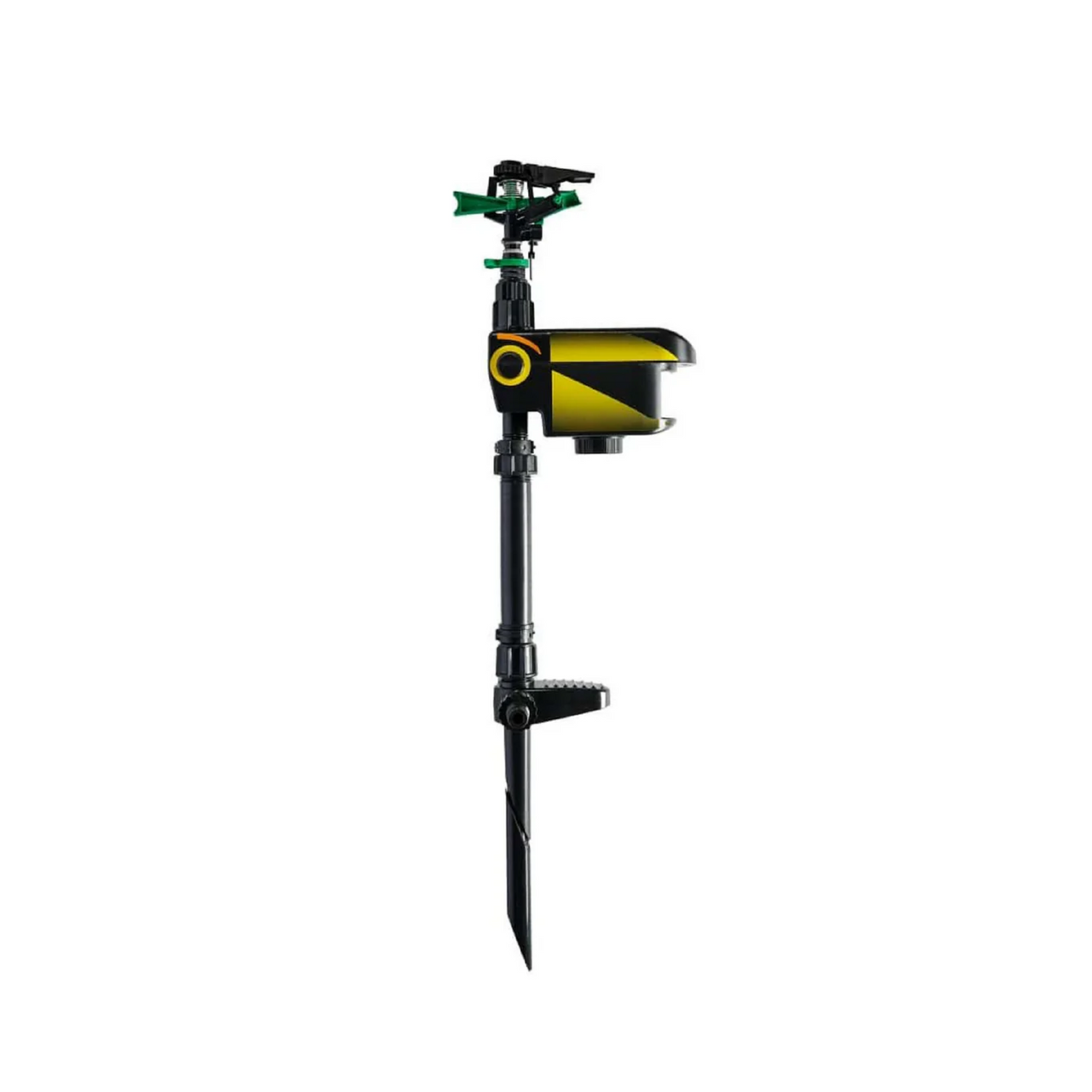
If you don’t want them in the garden, using natural deterrents is a highly successful way to keep them away from areas. Using something like Garden Sentinel can keep possums away from prized plants and vegetables.

Product on the picture above: Envirobug Motion-Activated Pest Repeller Sprinkler
It is also important to remain active across your property. Leaving areas of your property, like outbuildings alone only encourages additional pests, as well as possums to inhabit them.
Conclusion
Possums are a common species that you’re going to find across Australia. The Common Brushtail possum is the most common species to be found in urban areas and is very adaptable. However, you’re unlikely to see the species as it prefers to come out at night.
As a protected species, it cannot be killed or harmed. However, there are ways to naturally deter the species from your property, if it has made a home on your property.


![Garden Watchman - Solar-Powered Pest Repeller [PRE-ORDER] - Envirobug](http://envirobug.com.au/cdn/shop/files/GardenWatchman_Image_1_1280x.png?v=1772687706)