
It's the time of year when cockroaches seem to be everywhere. They're in our kitchens, bathrooms and even our bedrooms. How do cockroaches get into houses? Why do cockroaches come inside?
If you've been finding more cockroaches around your house lately, don't worry - you're not alone. In this blog post, we will discuss cockroach infestation and how to get rid of cockroaches in your house once and for all. We'll discuss some common methods that people use to exterminate these pests, as well as some tips to help prevent them from coming back.
Major Species of Cockroaches
Cockroaches are among the most widespread household pests, with several key species frequently infesting residential and commercial properties.
German Cockroach
The German cockroach (Blattella germanica) is one of the most prevalent and challenging species to eradicate. These insects are relatively small and light brown, featuring two dark, parallel stripes along the back of the thorax. They proliferate at a rapid rate; a single female can produce up to 30 to 40 egg capsules during her lifespan. Drawn primarily to warm, humid environments with easy access to food and water, German cockroaches frequently contaminate kitchen surfaces and transmit disease-causing bacteria.
Oriental Cockroach
Another common pest is the Oriental cockroach (Blatta orientalis). Dark brown or shiny black in colour, these cockroaches are noticeably larger than the German species. They thrive in cool, damp locations and typically enter properties at or below ground level through drainage networks, sewer lines, or cracks in building foundations. Oriental cockroaches pick up harmful microorganisms on their bodies, posing a serious risk of contaminating food supplies.
American Cockroach
The American cockroach (Periplaneta americana) is the largest of the common pest species, growing up to 4 centimetres in length. Reddish-brown in colour, it is identified by a distinctive pale yellow band around the outer edge of its thorax. This species favours warm, dark, and moist conditions, frequently colonising subfloors, wall cavities, and commercial kitchens. Capable of short flights in warm weather, American cockroaches readily spread pathogens across surfaces and food prep areas.
Australian Cockroach
Despite its name, the Australian cockroach (Periplaneta australasiae) is distributed across many warm and subtropical regions worldwide. Measuring roughly 3.5 centimetres long, it is dark brown with prominent yellow markings on its thorax and along the outer margins of its front wings. Unlike other species that prefer remaining indoors, Australian cockroaches primarily live outside in garden beds, woodpiles, leaf litter, and greenhouses. However, they occasionally venture indoors into subfloors, wall voids, and roof spaces. While they mainly feed on plant material, they can become a nuisance inside the home by eating holes in clothing, fabrics, and paper items.
🐾Alex’s Wildlife Fact
How Do Cockroaches Get in the House?
One of the most persistent pests, cockroaches are unwelcome guests in any home. But how do these pesky creatures get inside in the first place? Unfortunately, there are several ways that cockroaches can gain entry to your home. Cracks and holes in the foundation or walls are one of the most common ways that cockroaches get inside. Even small cracks can provide enough space for cockroaches to squeeze through. Once inside, cockroaches can quickly multiply, infesting your entire home. Other common entry points include doors, windows and vents.
What Attracts Cockroaches Into Your Home?
Several factors can make your home appealing to these pests. Cockroaches are attracted to food sources, so if you have any spills or crumbs around your home, they will be sure to find them. They also like dark, warm and humid environments, so if your home is cluttered or has any leaks, these areas will be especially appealing to cockroaches. They are also attracted to certain chemicals that are commonly found in household products. For example, cockroaches are attracted to the chemical pheromone that is found in many perfumes and colognes. As a result, it’s important to be vigilant about keeping your home clean and free of food sources, as well as using household products that are less likely to attract cockroaches.
How to Get Rid of Cockroaches in the House
Sanitation
The first step in getting rid of cockroaches is to practise good sanitation. Cockroaches are attracted to food and water, so it is important to keep your kitchen clean and free of crumbs. You should also empty your bins regularly and seal any leaks that may be providing cockroaches with a water source.
Prevention
The best way to get rid of cockroaches is to prevent them from entering your home in the first place. Some simple prevention tips include sealing cracks and crevices around your home, removing potential food sources and keeping your kitchen clean. You should also be sure to regularly inspect your home for signs of an infestation and take action immediately if one is found.
Sticky Traps
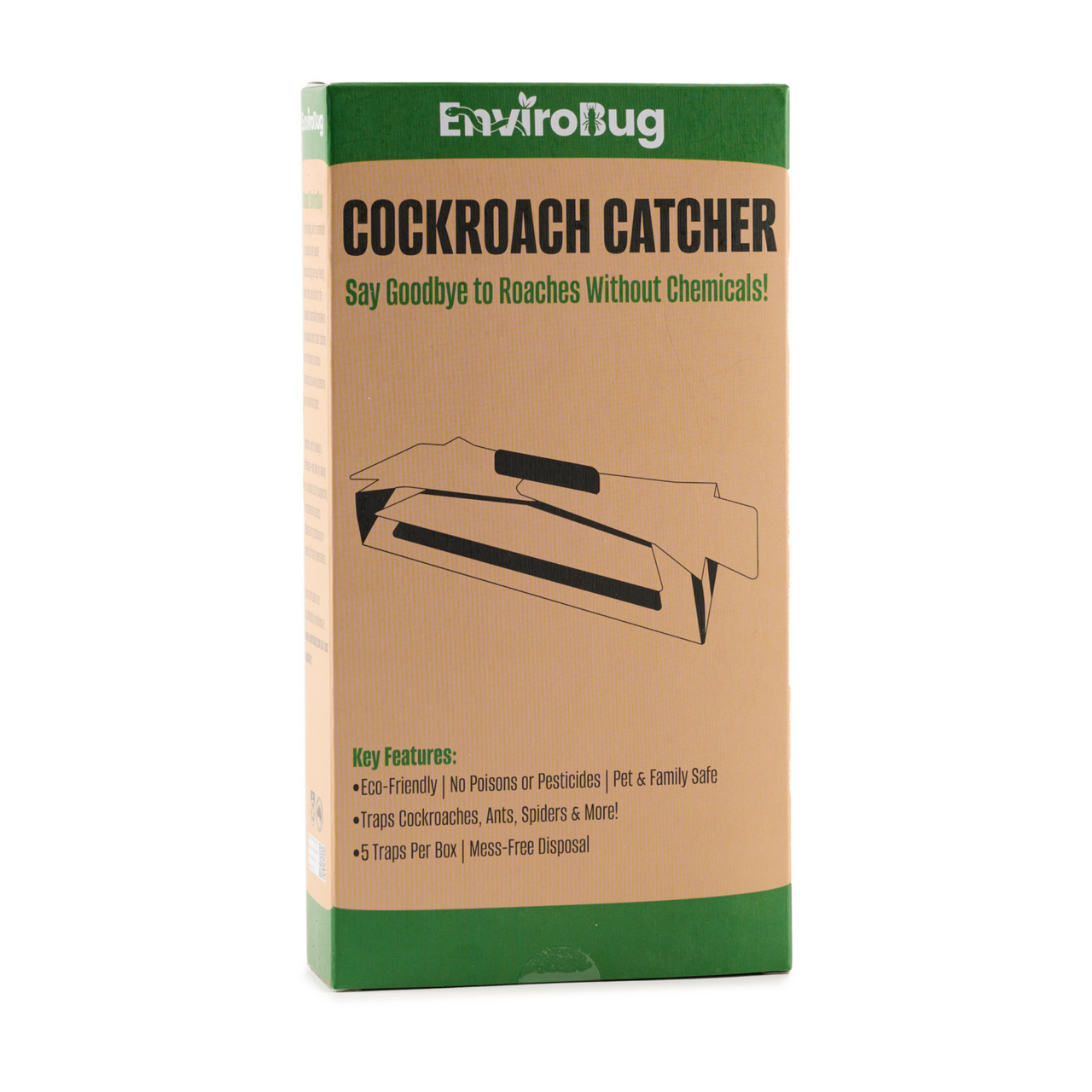
The EnviroBug Cockroach Catcher is a poison-free, adhesive trap designed to safely capture foraging cockroaches in targeted, high-risk indoor zones. Its compact design allows it to slide effortlessly into tight Australian household hotspots, such as dark pantries, underneath sinks and behind fridges where pests tend to gather. By simply baiting the trap with everyday food crumbs or odourless scraps, you engage an unbreakable, non-toxic adhesive grip that holds cockroaches fast, helping to monitor activity and break the breeding cycle without risking the health of children, pets or native wildlife. Available in packs of 5, they allow you to target all of your household hotspots simultaneously.
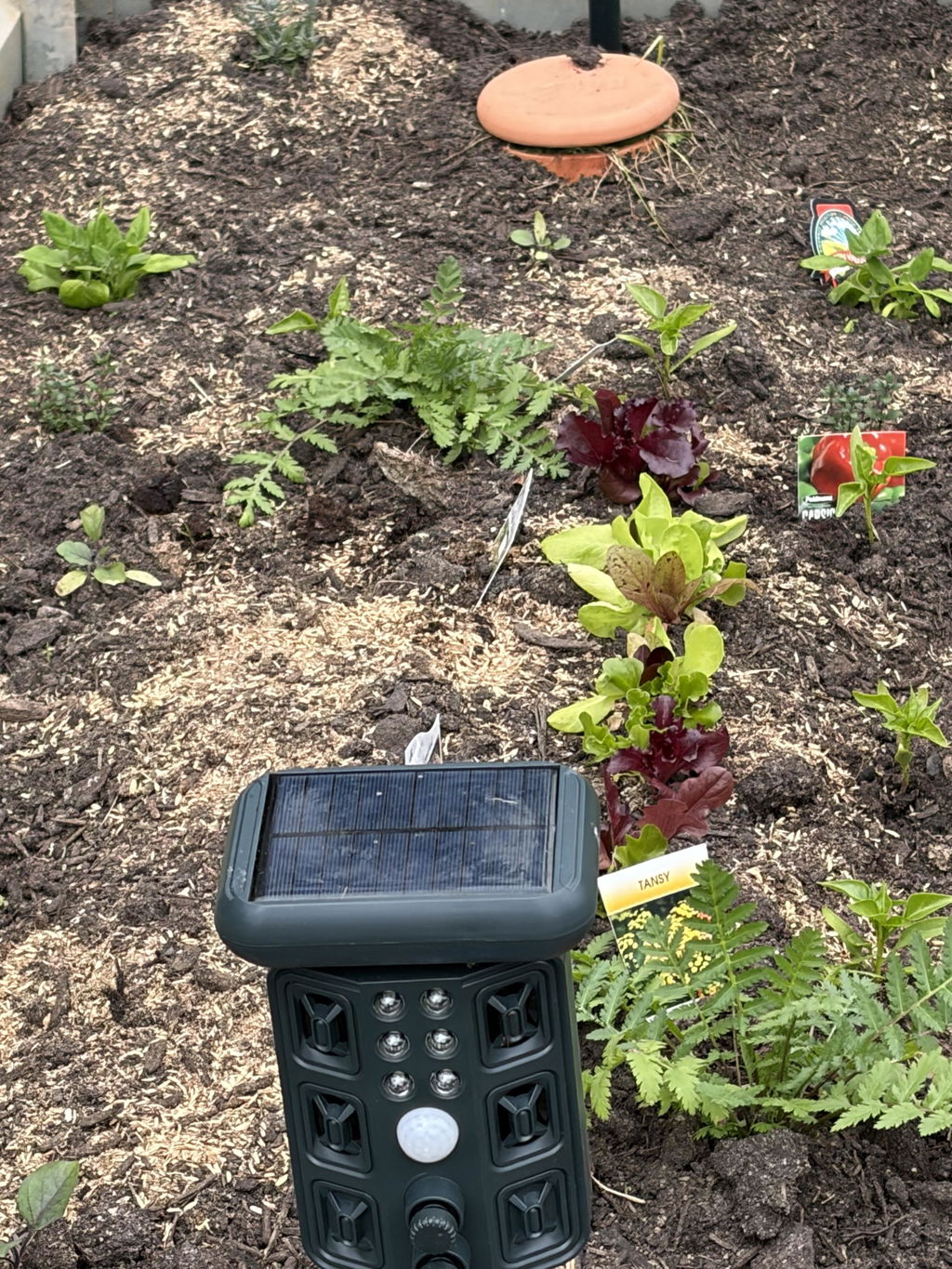
Ultrasonic Pest Repeller
If you're looking for a safe and effective way to get rid of cockroaches in your home, an ultrasonic pest repeller may be the perfect solution. Ultrasonic pest repellers work by emitting high frequency sound waves that are uncomfortable for cockroaches and other pests. This noise makes it difficult for them to remain in the area, causing them to eventually leave. For optimal results, the best practice is to use ultrasonic repellers in conjunction with sticky traps.
EnviroBug’s Ultrasonic Pest Repellers are a natural and effective way to get rid of cockroaches in your home without the use of harmful chemicals.
The Plug-in Ultrasonic Pest Repeller - Mighty (2nd Gen) is perfect for standard Australian indoor living areas, particularly hot spots like kitchens and pantries where cockroaches frequently hunt for food scraps. Operating silently 24/7 with a coverage of 80 to 120 square metres, it simply plugs into a standard wall socket to flood the area with constantly cycling frequencies. This automatic cycling ensures that resilient cockroaches cannot adapt to the environment, ultimately driving them away from your food preparation zones.
For larger open-plan living rooms or conjoined dining areas, the Stealthy 360-Degree Ultrasonic Pest Repeller offers comprehensive full-circle defence. It blankets up to 370 square metres of unobstructed indoor space with multi-mode electronic waves and pressure waves that target insect nervous systems. It can be conveniently powered via a standard plug or USB, making it an excellent choice for keeping large central living zones entirely free from creepy crawlies.
The Wireless Rechargeable Ultrasonic Pest Repeller provides cordless freedom for difficult-to-reach zones like roof cavities, sub-floors, and garden sheds where cockroaches often breed undisturbed. Equipped with a powerful 3000mAh battery that delivers up to seven days of continuous defence, it can be easily recharged via USB-C or left plugged in for permanent protection. This portability makes it highly effective for creating a barrier in enclosed spaces up to 200 square metres, preventing pests from migrating into the main house.
When dealing with a severe or stubborn cockroach infestation, The Brute delivers an uncompromising, industrial-grade assault across expansive areas up to 600 square metres. It features customisable settings that combine intense ultrasound, piercing alarms, and flashing strobe lights to completely disrupt pest navigation and force them out of your property. This heavy-duty unit is ideal for large Australian garages, sheds or rural homes.
Pest Control
Professional pest control should be considered your absolute final option, reserved strictly for severe infestations that cannot be managed through preventative methods. It is important to be aware that these commercial treatments rely heavily on potent, poisonous chemicals and insecticides that can pose genuine risks to your health and the safety of your household. If a situation forces you to engage a specialist, you must strictly follow all safety, evacuation, and preparation guidelines dictated by the company you contact to ensure your family and pets are fully protected.
Conclusion
Cockroaches are entirely unwelcome in any Australian household, not just for the fright factor, but because they carry nasty germs known to cause serious diseases. Deploying proactive steps for prevention and utilising non-toxic repellent devices early on can reduce both the economic burden and the health risks associated with managing a costly, deep-seated cockroach infestation.
FAQs
It usually takes a week to ten days to get rid of roaches entirely, but it depends on the extent of the infestation and how well you adhere to the treatment plan. Roach infestations can be difficult to get rid of, so it's important to be patient and thorough in your approach.
If you feel like you are losing the war against cockroaches, you are definitely not alone. These prehistoric survivors are notoriously difficult to evict, usually due to a combination of their biological superpowers and a few common oversight areas:
-
Pesticide Resistance and Chemical Hazards: If you have been blasting them with store-bought sprays, they may have developed a tolerance. Cockroaches breed and mutate rapidly, meaning entire populations can quickly develop an immunity to standard treatments. More importantly, relying on these chemical insecticides is a severely harmful solution for your home; they leave behind toxic residues that can compromise your indoor air quality and pose genuine health risks to your family and pets.
-
Extreme Hardiness: They can survive for up to a month without food and a week without water. Even if you think your kitchen is spotless, the tiniest speck of grease behind the oven or condensation under the sink is a five-star buffet to them.
-
Hidden Breeding Sanctuaries: For every cockroach you see in the open, there are dozens more hiding undisturbed in wall cavities, roof spaces, or behind skirting boards. If you are only targeting the ones on your counters with dangerous sprays, you are missing the root of the infestation while unnecessarily exposing your household to toxins.
To permanently clear them out, you need to ditch hazardous chemical quick-fixes and shift to a safe, continuous, multi-layered approach that disrupts their behaviour and targets their hidden nesting zones naturally.


![Mighty Plug-in Ultrasonic Pest Repeller (Gen 2 Metro Edition) [PRE-ORDER for early Feb] - Envirobug](http://envirobug.com.au/cdn/shop/files/Envirobug_Mighty_Pest_Repeller_3_1280x.png?v=1788151885)