
There is nothing more Australian than possums. But while they’re part of everyday lives, you really don’t want them feasting in your garden or nesting in your roof cavity. Possums can heavily damage your home by chewing through cables and wood. They can also wreck gardens while foraging for food. And there is nothing worse than them playing in the roof at 3am. In this article, we look at how you can protect your home, plants and garden from possums without using poisons and chemicals.
Understanding Possum Behaviour
Possums can have an immense impact on your garden when they decide to make it part of their territory. They cause damage to homes, especially when they access roof spaces to make dens. They can also cause damage to plants.
Plants are a natural part of their diet, and they’re often eaten when their favourite food (insects) is scarce. Possums prefer rotting plant material, so are essentially nature’s clean-up crew. If they can’t find overripe or rotting plant material and there are no insects present, they will chew on other plants. Possums typically reach for fruit trees or vegetable beds.
Those with fruit trees or vegetable gardens are most at risk, as possums prefer these plants.
However, they will eat other plants as well, such as those with large leaves.
Here are some signs of possum damage to look out for:
-
Damaged plants/trees, especially on the bark and broken branches
-
Crushed stems of ground plants
-
Partially eaten leaves/fruit on the ground
-
Rubbish outside of the bin as they’ve raided them
-
Scratch marks on bins
-
Bad odours
-
Nesting materials near holes in walls
Effective Ways to Deter Possums from Eating Plants
In Australia, possums are legally protected. Killing or hurting possums using poisonous baits, insecticides or capturing them is illegal. Possums keep insect populations under check and are an important part of our ecosystem. If you do not want possums to raid your property and home, here are some humane and sustainable options to deter possums.
Physical Barriers
To keep possums away, The first thing that you can do is to install physical barriers around your garden. you can install fences to create a perimeter and use nets for enclosure.
Depending on the area, you can install possum deterrent devices for maximum protection. In a garden or backyard, we recommend using -
The Garden Guardian
The Garden Guardian is an ultrasonic animal repeller with motion activation. It uses IR to detect the heat signatures of unwelcome animals and emit high-frequency sounds along with bright flashing lights to deter possums within a 10 metre range.

The Garden Watchman
If you have a large property or are looking for a higher detection range, the Garden Watchman is your perfect choice for deterring possums. The Garden Watchman comes with a built-in Passive Infrared (PIR) sensor that detects movements within 13 metres and instantly triggers a 15-second burst of ultrasonic sound and LED light to startle and deter possums.
![Garden Watchman - Solar-Powered Pest Repeller [PRE-ORDER] - Envirobug](https://cdn.shopify.com/s/files/1/0591/7145/files/GardenWatchman_Image_1.png?v=1772687706)
The Garden Sentinel
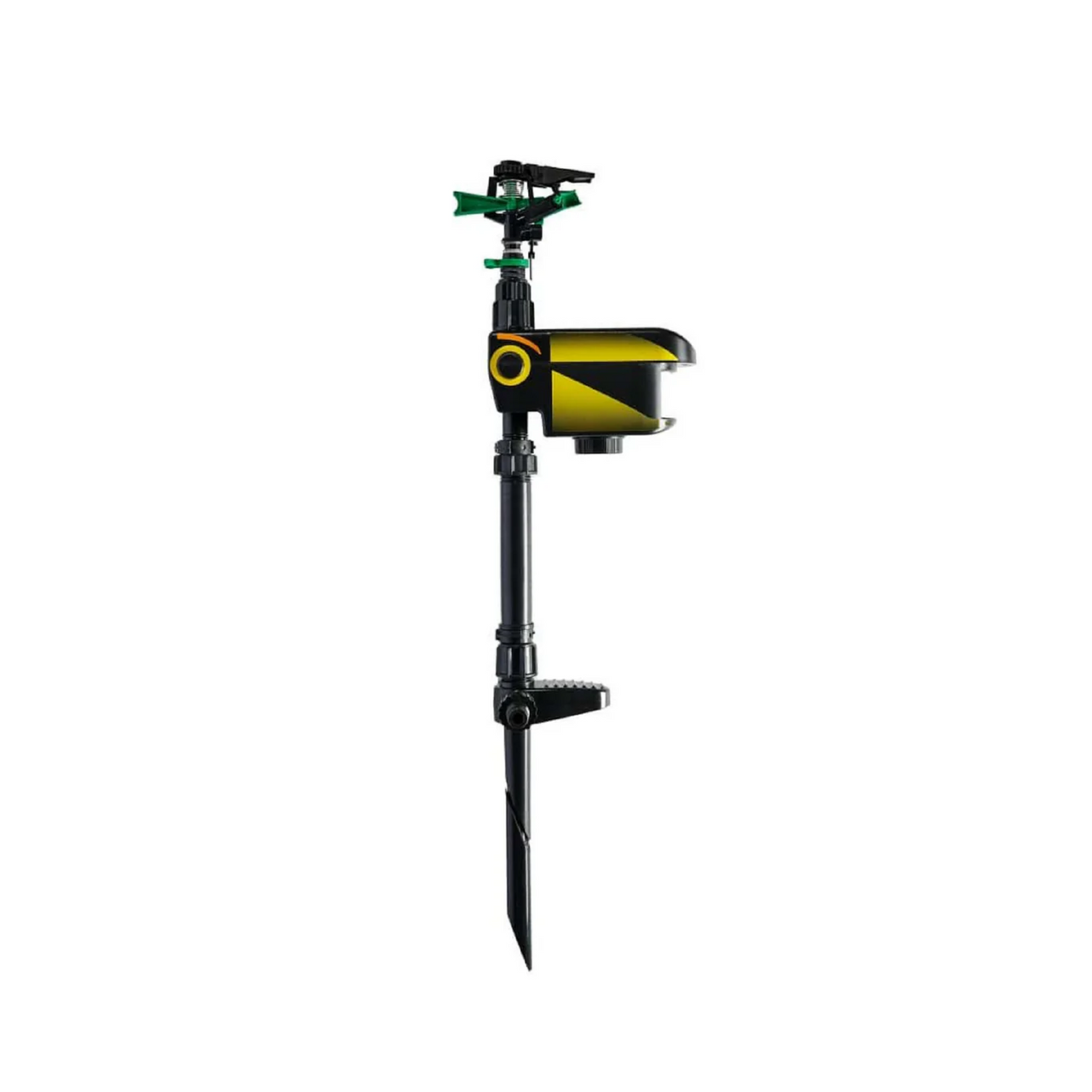
If you have water supply nearby, the Garden Sentinel can be an effective possum deterrent. The Garden Sentinel is a motion activated sprinkler that deploys a startling burst of water, combined with unexpected noise and motion to deter possums. The sprinkler has a range of up to 300° offering a wide coverage. You can install a row to create a perimeter near fences.

Natural Possum Repellents
As a complementary approach with possum deterrents, try adding to your garden plants such as mint, lavender, citronella, rosemary, geraniums, and chrysanthemums. It is important to note that relying on these plants alone will not deter possums. While their pungent aromas are often off-putting to wildlife, a hungry or determined possum will easily bypass a flowerbed of lavender to reach their favourite fruit tree. These botanical additions are most efficacious when used as a secondary layer of defense alongside physical barriers.
Protecting Specific Plants from Possums

How to Protect Passion Fruit from Possums
Passion fruit is a favourite of possums. In order to protect passion fruit from possums, you can cover the fruits using fruit bags. Fruit bags are fruit tree nets with a fine mesh that can protect individual branches and fruits from possums.
How to Protect Vegetable Gardens from Possums
Vegetable gardens often act as possum attractants. Drape nets are a perfect cover for small to large vegetable gardens and beds. Drape nets are fairly simple to put up using supporting poles around vegetable patches. Since drape nets are propped up using poles, the net does not come directly in contact with your harvest, allowing air to circulate freely and your produce to ripen without being bruised or restricted by the mesh.
How to Protect Trees from Possums
Possums are excellent climbers and often nest in tree trunks. Their sharp claws can significantly damage trees. Drawstring tree nets can be used to cover entire trees for preventing possums from climbing them. The drawstrings provide a snug fit around the trunk, sealing all gaps and eliminating the risk of possums exploiting the base to reach the trunk from underneath. As a possum protectant, local councils often wrap tree trunks with Perspex or metal tree collars to prevent possums from climbing them.
All of the bird & insect netting, including the drape nets and fruit bags here at EnviroBug are compliant with all regulations and recommendations in Australian states and territories. So you can harvest, without harm!
Final Word: How to Protect Your Plants and Garden from Possums
Possums are nature’s pest managers, but they can often be pesky. Australian gardens provide abundance of food for possums, who, if given the opportunity to dine in will not waste a moment. Direct contact with possums or their urine and faeces may trigger infections in humans and pets. Possum deterrent devices offer pet-safe, humane and eco-friendly ways to prevent possums from nesting and feeding in your garden.


![Garden Watchman - Solar-Powered Pest Repeller [PRE-ORDER] - Envirobug](http://envirobug.com.au/cdn/shop/files/GardenWatchman_Image_1_1280x.png?v=1772687706)