Learn the Best Time to Catch Rodents – When Are Mice Most Active?

Learn the Best Time to Catch Rodents – When Are Mice Most Active?

Mice are fascinating creatures. They tend to follow a very predictable pattern. This routine provides the mouse with a schedule it knows it can trust, but it is also a weakness. Predators, like snakes, learn these patterns and use them to hunt rodents. And humans can use these patterns to understand and catch mice that have entered the home.

But mice have known this a long time. Therefore, they’ve evolved behaviours that allow them to remain hidden better. For one, mice will not feast in one location. Instead, they tend to find several food sources and steal the tiniest amounts from each source every night.

In this article, we are going to look at when mice are most active and therefore, how you can get rid of mice.


What Time of Year are Mice More Active?

Like many animals, mice show activity not just based on the time of day, but also on the time of the year. Mice are generally more active during the late summer or early autumn. However, it is not unknown to notice them throughout the year, but with less frequency.

During the summer and autumn time, young mice have left their parents’ nest and looked for their own locations, though these are generally relatively close, so there tend to be more mice within a small area.

Mice during the later summer and early autumn are also known to keep breeding, having late broods.

One of the other reasons why mice might be active during this period is that there is a lot of food at this time, especially around farms. Grains are a particular favourite food item for mice.


What are Mice Active Hours During the Day?

The time of mouse activity is important to understand their behaviour. Mice are essentially one of the main prey items for numerous predators, from mammals to reptiles. Mice have a lot to be afraid of. They’re also fearful of humans. We don’t eat them, but they’ve learnt that many humans will catch and kill them.

So, if you’re asking when mice and rats are most active, then you’ve got to consider the behaviours of the predators. And this is the driving force behind all behaviours. Mice tend to be active at periods when all predators have the lowest potential to see them, which is at dusk and dawn outside.

This is when predators can’t see as well because it is neither night nor day and the eye structure of most animals hasn’t learnt to cope with these light conditions. However, that doesn’t mean that predators aren’t active, just that the mouse has a slight advantage.

The mouse further adds to this advantage by sticking close to the edges, and its silhouette is hidden against the wall.


When are Mice Active in a House?

In the house, it can be slightly different. Mice will tend to hide until about an hour after human activity has reduced significantly. So if you go to bed at 11 pm, and mice are in your house, they will tend to come out at about midnight.

But at the same time, it might mean they are active during the day if there is no one in the house at that time.

This can cause problems. As discussed, mice tend not to overindulge in one location, instead taking a micro amount from each location. Therefore, it can be hard to detect when one or two mice are in the home.

When mice are seen outside of these times, it is because the rodents have become very confident and have grown in numbers. If you see mice during the day, then there is going to be a large nest somewhere close.


How to Get Rid of Mice?

Getting rid of mice is the key concern for many. But that isn’t challenging. There are a few simple steps that can be taken to get rid of mice throughout any home.

Remove Access to Food – One of the big problems is that mice are attracted to food. By removing open bins, bird food, or other food items, you can remove their access to food. It is important to note that water is not a major concern for mice, though it is for rats. Removing water from your property will not discourage them as they will get this from another location.

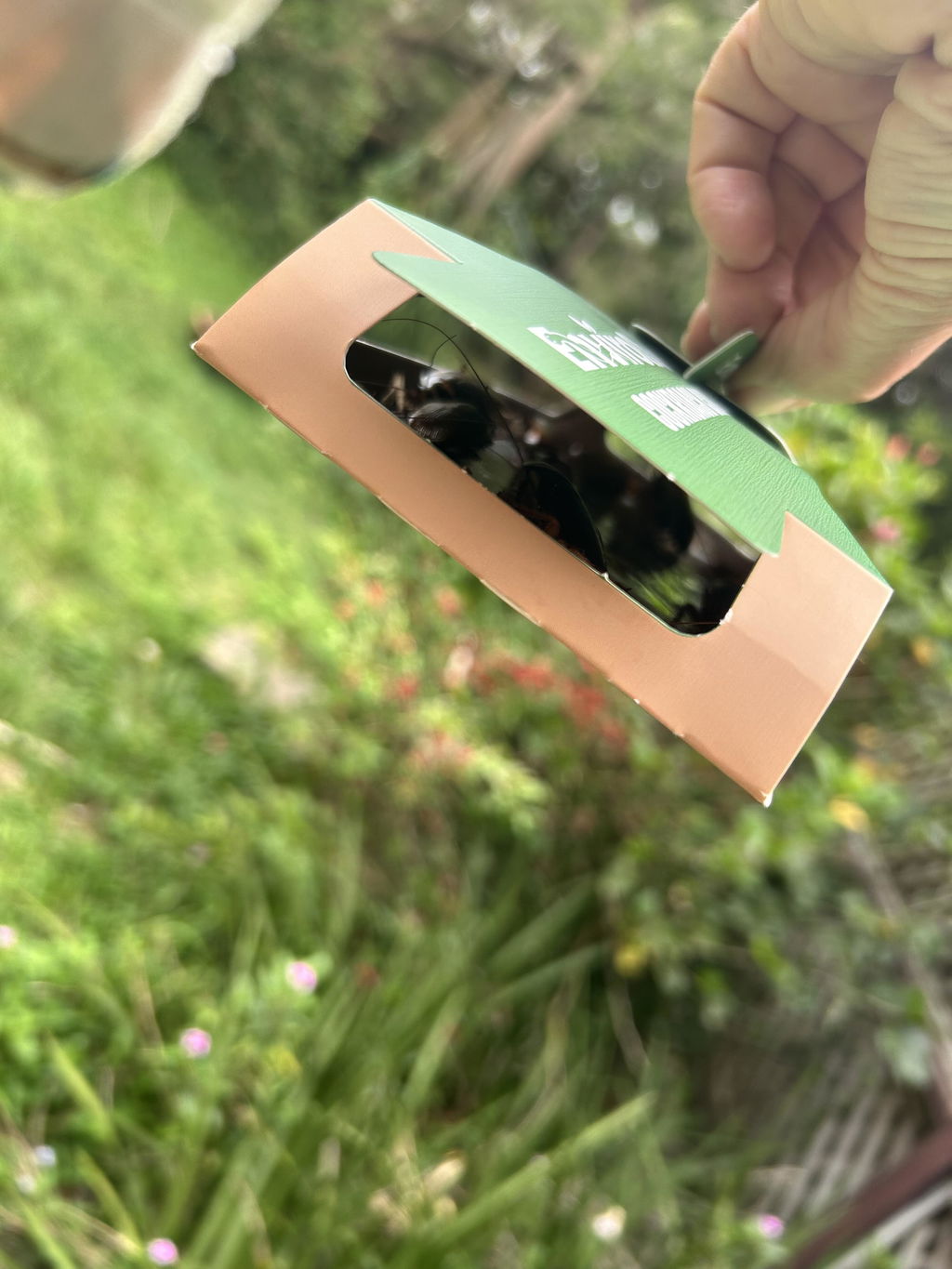
Remove Access Points – Access points are one of the big problems. Mice can squeeze into incredibly small holes, squishing their skull to fit in impossible spaces. Ensuring there are no holes in the wall that are a quarter of an inch or larger is vital to keep them out. Placing ethical mouse traps around places where you've seen signs of activity is also an effective way to trap and relocate live mice for spot reduction.

Rodent Deterrents – While we may dislike mice, they are useful for the ecosystem, helping to control specific populations, serving as a food source for predators, and helping to fertilise the soil. However, you just don’t want them in the home. That is why using an ultrasonic rodent repeller is the best option, rather than killing them. These devices allow the mouse to live but keep them from your home using sounds only they can hear, but they detest. Outside your home, if you've noticed signs of mice activity inside vehicles, wireless ultrasonic repellers can work as a perfect car rodent repellent.


Conclusion

When are mice most active in a house? This is a tougher question. It all depends on your behaviour. However, they are typically active after you’re no longer active. The best course of action is to always make your home less appealing to rodents, rather than trying to catch them. This should be done even before you know you have a mouse in the house.


FAQs:

What time of day is best to catch mice?

Mice are generally inactive during most of the day and when humans are around. They tend to come out during dawn/dusk periods or when they are confident that humans are not present. This is the best time to catch a mouse.

Why are mice most active at night?

Mice are most active during the twilight and night times because this is when predators are less active or have a harder time catching them.

Are mice active at 6 am?

Yes and no. Some mice might be active during this period, or during certain times of the year. However, if it is bright sunshine or there are humans present at this time, they will have retreated to their nests.

What time are mice most active?

Mice are not active at a particular time. More often than not, they’ve adapted their activity to their environment, being active at periods when predators and humans in the area are not active.

What time of day is best to catch mice?

Mice play an important part in our ecosystem. Therefore, it is important to not catch mice, but rather deter them from your home by removing access to food/shelter and making the environment less appealing.

What time of day are mice active?

Mice are most active during the twilight periods or when human activity is reduced. If a mouse is seen, it is most likely a sign that there are dozens of them nearby.

EnviroBug blog and resources

You may be interested in...

Products

sale
The Commercial Command Pack - Envirobug
Stealthy 360° Ultrasonic Pest Repeller (4th Generation) from $59.00 $69.00
Drive pests out safely, contactless and hassle-free. Ultrasonic waves repel without traps or toxins. Rodent baits kill owls and other natives via secondary poisoning. Go ultrasonic: the Stealthy 360° (4th Generation) blasts cycling state-of-the-art high-frequency ultrasonic and electromagnetic sound waves across full rooms that only small pests can hear. It will irritate rats, mice and small possums and get them to leave. USB or 240V powered, silent operation or modes with sound for big pests. Covers 370 sqm in open spaces - garages, homes, sheds. Pet-safe, no mess, Aussie-tested. Prevention Pays Off Prevention beats poison — every time. And protects biodiversity. Rats and mice target indoor warmth, food scraps, nests. Act first: seal gaps, tidy pantries, deny access. Ultrasonics drive them out before infestations — no rotting carcasses in walls or behind appliances. Avoid the horror and the smell! Protect your home, poison-free. Key Features 360° ultrasonic blast: Full-circle waves repel rodents, rats, mice, small possums. Triple disruption: Choose your mode - Ultrasonic, pressure, electromagnetic waves. Strobe scare option: Flashing lights startle pests visually. Massive coverage: Up to 370 sqm in open indoor spaces. Dual power: USB or 240V AU plug for flexibility. Multi-mode power: Stealth ultrasonic or audible for tough jobs. Clear indicator: Operation light shows active status. 3 versatile modes: Tailored for rodents, insects, spiders. Power-smart: Low running cost. Pet-safe: Harmless to cats & dogs. Energy-efficient: Low power usage. Compact build: Fits anywhere indoors. 12-month warranty: Aussie-proven reliability. Maximise Effectiveness Clear paths boost wave reach — avoid furniture or other blockages. Pressure Wave: Inaudible to humans - effectively repels mice. Ultrasonic Wave: Low sound - ideal for repelling mice and rats. Electromagnetic Wave: Produces a harsher sound - repels larger pests such as large rats or small possums. Note: Short activity spike is normal - pests are disturbed and therefore more active, then gone. 🐾OUR Zoologist Advice Position your ultrasonic repeller in a spot that has had pest activity (e.g. droppings, noises), or in the same room.
Quick View
sale
Tree Defender – Fruit Tree Netting for Birds and Insects - Envirobug
Tree Defender – Fruit Tree Netting for Birds and Insects from $24.00 $30.00
Harvest Without Harm  Our netting is compliant with wildlife regulations across Australia, so you can protect your fruit while also protecting our native wildlife! Protect your fruit and local wildlife at the same time with EnviroBug Tree Defender netting. Designed to help keep birds and insects away from your trees, it creates a simple physical barrier that helps safeguard blossoms, fruit and new growth without poisons or sprays. Birds and insects can damage fruit trees by eating fruit, breaking branches, stripping leaves or boring into the tree itself. Once fruit is damaged, it often falls early and can rot on the ground, while more serious damage can weaken the tree and affect future harvests. The best way to protect fruit trees is to stop pests from reaching them in the first place.  EnviroBug’s fine mesh netting helps block access while still allowing sunlight and moisture through, making it a practical, all-season solution for gardeners who want strong protection without harming native wildlife. Key Features Ultra-fine mesh protection (20D mesh). Helps keep birds, fruit flies, snails and other pests off your fruit while still letting sunlight and moisture through. Built to last. UV-stabilised polyethylene helps the net stand up to harsh sun and everyday garden use. Snug drawstring closure. Creates a secure fit around the trunk to help stop pests getting in underneath. Zippered access. Makes it easy to check, care for, and harvest your tree without removing the whole net. Uses for the Fruit Tree Netting EnviroBug’s Tree Defender is ideal for protecting fruit trees while they’re producing and vulnerable to birds, insects and other pests. It creates a physical barrier that helps keep your harvest intact without poisons, sprays or constant intervention. It’s also a smart choice for young trees, where tender growth can be more easily damaged. Using netting early helps protect developing trees while they establish, giving them a better chance to grow strong. Specific Recommendations For best results, install the netting after flowering, just as your fruit is starting to form. As our netting is insect proof, installing too early can prevent pollinators from accessing your flowers.  It’s also worth checking the net regularly, especially after garden work or windy conditions. A quick inspection helps you catch any movement or damage and make sure the net is still covering the tree properly.
Quick View
-21% sale
Garden Guardian 2nd Gen – Solar Powered Ultrasonic Animal Repeller - [PRE-ORDER for Mid November] - Envirobug
Garden Guardian 2nd Gen – Solar Powered Ultrasonic Animal Repeller $79.00 $99.00
Uninvited animals don't keep business hours — and neither does the Garden Guardian. This solar-powered, motion-activated repeller works around the clock to drive off possums, cats, rabbits, birds, foxes, wallabies, deers, ducks  and more with high-frequency ultrasonic pulses and a startling flash of light. No poisons. No traps. No suffering. Just your garden, protected day and night. Why Garden Guardian? Most pest problems happen after dark, which is exactly when you're not out there watching. The Garden Guardian's infrared motion sensor detects the heat signatures of approaching animals and fires instantly — a burst of ultrasonic sound and flashing LED that sends them packing before they reach your garden beds, pool, chicken coop or veggie patch. It recharges itself during the day so it's always ready to go, day or night. Key Features Stops Pests Before They Strike — IR motion sensor detects animal heat signatures instantly and fires ultrasonic pulses + flashing LED the moment something approaches. Reactive defence, not passive hoping. No Power Bills. Ever. — Runs entirely on solar with rechargeable NiMH battery backup. Plant it, forget it — it recharges itself while you sleep. Safe for Your Family. Unbearable for Pests. — 25–61 kHz ultrasonic frequency drives target animals away fast. Covers What Matters Most — Up to 10 metres of targeted protection across garden beds, veggie patches, pool surrounds and chicken coops. Point it where pests enter. Built for Australian Conditions — IPX65 weather-resistant, UV-stabilised polyethylene that handles rain, heat and full sun without flinching. No babysitting required. Protect Your Garden Without Poisoning It — Humane, chemical-free deterrence. Your native wildlife, pets and kids are safe. Pests are not welcome. Up and Running in Minutes — No tools, no wiring, no electrician. Stake it in, switch it on, done. We've Got Your Back — 12-month warranty with fast, local Aussie customer service. 
Quick View
-17% sale
Fly Bio Bait Bag [PRE-ORDER] - Envirobug
Fly Bio Bait Bag *Pre-order* $15.00 $18.00
*Back in stock early Jan 2027* Flies don't need an invitation — but they do need a trap. The Fly Bio Bait Bag is a simple, hands-off solution that draws up to 30,000 (!) flies away from where you live and into a bag they can’t escape. No sprays, no poisons, no swatting. Just add water, hang it up and let biology do the rest.  Why Fly Bio Bait Bag? Most fly control is reactive — you're spraying or swatting after they've already arrived. The Fly Bio Bait Bag works proactively, pulling flies away from your entertaining areas before they become a problem. Hang it near the source - bins, gardens, patios, sheds, and let it draw fly activity away from where you actually want to be. This little bag punches well above its weight, catching up to a massive 30,000 flies, especially through spring and summer when fly numbers surge. This is a practical lower-toxin option for homes wanting a more considered way to manage flies, designed to attract and trap large numbers of flies, helping population control. Key Features Draws Flies Away From You — Bait-activated lure pulls flies toward the trap and away from you. No Sprays. No Poisons. No Mess. — A more considered approach to fly control that doesn't fog your outdoor space with chemicals or leave residue where kids and pets play. Dead Simple to Set Up — Bait included. Add water, hang it up, done. No tools, no fuss. Goes Anywhere Flies Do — Hang from a tree branch, gutter, eave or outdoor ceiling. Works around patios, gardens, sheds, bins and entertaining areas. Built for the Warmer Months — Spring and summer fly pressure is real. Keep a few on hand and rotate them through the season when activity peaks. 25cm × 30cm Hanging Design — Compact enough to place discreetly, large enough to make a real dent in fly numbers over time. 🐾OUR Zoologist Advice Place two or more traps around the perimeter of your area. This helps draw flies away from spaces where people and animals spend time. Be mindful that dogs may be attracted to the traps due to their sensitive noses, so hang them out of reach. During summer, (when flies are at their worst) flies are drawn to cool, shaded areas and sources of water—position traps in these spots for best results.
Quick View