Hantavirus in Australia

Hantavirus in Australia

While Australians are generally more concerned with bushfires, magpie swooping season or the occasional snake in the laundry, the 2026 cruise ship Hantavirus outbreak has prompted a flurry of questions: Is it here? Are our mice dangerous? And should we be worried when we’re clearing out the garden shed?

The unease is understandable, especially as many regions are currently grappling with the 2026 mouse plague, which experts warn could rival the scale of the devastating 2021 mouse plague. As of May 2026, parts of Western Australia and South Australia have reported mouse numbers at plague proportions, with the CSIRO describing the situation in the WA wheatbelt as "about as bad as it can be." While these plagues are traditionally seen as agricultural disasters, the recent Hantavirus warnings have added a layer of clinical anxiety to the mix.

On any given day, you should be worried about clearing out clutter from your home, regardless of a global outbreak since rodents can carry other health hazards. As per the Australian Centre for Disease Control, Hantavirus has never been reported in Australia in humans. However, prevention is always better than a cure when it comes to managing rodent-borne risks.

This article explores the reality of Hantavirus in the Australian context, separating the scientific facts from the sensationalist headlines.

What is Hantavirus?

Hantaviruses are a genus of viruses in the family Hantaviridae. Unlike COVID-19 or Influenza, which spreads from human-to-human, Hantavirus is an obligate zoonosis. This means it is almost exclusively transmitted and spread from animals to humans, with the virus residing permanently in various rodent species such as mice, rats and voles (commonly found in North America, Europe, and Asia).

The virus is unique because it generally does not make its rodent host sick. Instead, the rodent becomes a lifelong carrier, shedding the virus through its saliva, urine and droppings. Humans typically become infected through aerosolisation. When rodent waste is disturbed—perhaps by a broom or a vacuum cleaner—microscopic particles containing the virus become airborne and are inhaled.

Scientists generally categorise Hantaviruses into two groups based on where they were first discovered and the symptoms they cause:

  • "Old World" Hantaviruses (Orthohantavirus): Found mostly in Europe and Asia, these usually cause Haemorrhagic Fever with Renal Syndrome (HFRS), which primarily attacks the kidneys.

  • "New World" Hantaviruses: Found in the Americas, these cause Hantavirus Pulmonary Syndrome (HPS), a severe and often fatal respiratory condition.

Black Rat (Rattus rattus) by Lukas Krug

What is the Hantavirus Fatality Rate?

The fatality rate for Hantavirus is, frankly, nothing to sneeze at—which is ironic, given how you catch it. The severity depends heavily on the specific strain of the virus involved.

Hantavirus Pulmonary Syndrome (HPS)

HPS is the "New World" variety and is significantly more lethal. According to the latest data from 2026, the case fatality rate for HPS in North and South America remains high, often cited between 35% and 50%. Because the lungs fill with fluid so rapidly, even young, healthy individuals can succumb to the virus within days of the symptoms becoming severe.

Haemorrhagic Fever with Renal Syndrome (HFRS)

The "Old World" strains are generally less lethal but still serious. The fatality rate for HFRS varies between 1% and 15%, depending on the strain. For instance, the Hantaan virus (found in Asia) is on the higher end of that spectrum, while the Puumala virus (common in Europe) is rarely fatal, with a death rate of less than 1%.

Do All Mice Carry Hantavirus?

This is perhaps the most common misconception. If every mouse in Australia carried Hantavirus, our hospitals would be in a permanent state of emergency. In reality, each strain of Hantavirus is typically linked to one or two specific rodent species.

In the United States, the primary culprit is the Deer Mouse (Peromyscus maniculatus). In Europe, it’s the Bank Vole. In Australia, the common house mouse (Mus musculus)—the one you’ll find in your kitchen cabinets—is widespread, but it has not historically been identified as a primary carrier for the most dangerous Hantavirus strains like Sin Nombre.

However, research by the CSIRO (Australia's national science agency) in early 2026 indicates that while human cases haven't been recorded here, we must remain vigilant. Nature isn't static, and as rodent populations shift or new species are introduced, the risk profile can change.

Can You Get Hantavirus From Old Mouse Droppings?

The short answer is yes, but the risk decreases over time. The virus is relatively fragile outside its host. In most domestic environments, the Hantavirus can remain infectious in droppings or urine for about two to four days. Environmental factors play a huge role:

  • Sunlight: UV rays are quite effective at breaking down the virus.

  • Temperature: The virus survives longer in cold, damp conditions.

  • Age: Droppings that have been sitting for weeks or months are much less likely to contain active, infectious viruses.

The danger isn't just the virus; old droppings can carry other nasties like Salmonella or Leptospirosis, which are dangerous to your well being. From a safety perspective, you should always treat rodent waste as if it were fresh and dangerous.

What are the Hantavirus Symptoms?

The early symptoms of a Hantavirus infection are almost indistinguishable from a standard case of the flu. This often leads to a delay in diagnosis.

The Early Phase (1–5 Days)

Patients typically experience:

  • High fever and chills

  • Severe muscle aches (especially in the thighs, hips and back)

  • Fatigue and dizziness

  • Headaches

  • Abdominal pain and vomiting

The Late Phase (4–10 Days Post-Onset)

This is where the two types of the virus diverge. In the HPS variant (that attacks the respiratory system), the patient will suddenly begin to cough and experience extreme shortness of breath as the lungs fill with fluid. In the HFRS variant (that attacks the renal system), the patient may experience low blood pressure, vascular leakage and eventual kidney failure.

How Common is Hantavirus in Australia?

To date (May 2026), there has never been a recorded case of a human contracting Hantavirus within Australia. This is excellent news, but it comes with a caveat. Australia has several unique species of rodents and "pseudo-rodents" (our native rodent species). While we haven't seen the specific pathogenic strains that plague the Americas or Asia, the CSIRO and other health bodies continue to monitor our native and invasive rodent populations.

The 2026 cruise ship incident (the MV Hondius outbreak) involved international travel, which is currently the primary way Hantavirus might "visit" Australia. If an Australian traveller is exposed to infected rodents abroad and returns home during the incubation period, they could technically become a case. However, because person-to-person transmission is extremely rare (with the exception of the Andes strain in South America), the risk of an outbreak on Australian soil remains very low.

How to Prevent Hantavirus in Australia

Prevention is entirely about rodent control and safe cleaning. Since we can’t ask the mice to leave politely, we have to take more proactive measures.

1. Eliminate Easy Access to Food

Securing your food supply is a critical first step. All cupboards and storage areas should be impenetrable to mice and rats. Because these pests can squeeze through remarkably small openings—essentially any gap that fits their head—it is vital to seal all external entry points around your home.

2. Use Ultrasonic Devices

Ultrasonic devices work by emitting high-frequency sound waves that are completely inaudible to humans and common domestic pets, such as dogs and cats. However, to rodents—who possess a much broader hearing range—these sounds are perceived as an intense, jarring noise. This auditory stress disrupts their ability to communicate, sleep and nest, effectively making your home an "uncomfortable" environment that they will eventually choose to abandon.

Stealthy 360 Degree Ultrasonic Pest Repeller (4th Generation) - Envirobug

These devices are widely recognised as a more humane alternative to traditional methods. Because they rely on sound rather than anticoagulants (poisons) or mechanical traps, they avoid the cruelty of a slow death and the hygiene risks associated with disposing of carcasses.

Mighty Plug-in Ultrasonic Pest Repeller (Gen 2 Metro Edition) [PRE-ORDER for early Feb] - Envirobug

Pictured Above: EnviroBug Mighty Plug-in Ultrasonic Pest Repeller 

3. Keep Bins Secure

Household bins are a magnet for rodents. To mitigate this risk, store your bins in a secure enclosure and ensure the lids are always flush and fastened. On collection day, avoid leaving additional bags beside the bin, as these provide an effortless meal for local pests.

Similarly, you should clear or secure any other waste on your premises. Rubbish piles, compost heaps and organic waste deposits are prime targets for scavenging; keeping these areas tidy and inaccessible is a vital step in rodent-proofing your home.

4. Minimise Hiding Spots

Rodents thrive in the hidden corners of a property. If you have a garage or shed that is often ignored, it can quickly become a haven for mice and rats.

Regular maintenance is a highly effective deterrent. By consistently cleaning and disturbing these outbuildings—even those without a specific purpose—you can significantly reduce the likelihood of a rodent problem developing. Keeping these areas tidy removes the "peace and quiet" that pests require to settle in.

5. Traps

For those who prefer not to use lethal force, the Envirobug Humane Mouse Trap offers a sophisticated, non-lethal way to clear your home. These traps are designed to capture the rodent safely and securely, allowing you to relocate the animal far from your dwelling without causing it any physical harm or distress.

Final Word: Hantavirus in Australia

As of May 2026, Hantavirus remains a low-priority threat for the average Australian. While the global news cycle might make it feel like the next big plague, the biological reality is that Australia currently lacks the specific endemic strains that cause severe human illness.

However, "low risk" is not "no risk". The fundamental principles of hygiene and rodent control that protect against Hantavirus also protect against a host of other more common Australian diseases. So, keep the shed tidy, install ultrasonic repellers and ensure your waste is properly managed to discourage any unwanted guests from taking up residence.

Products

sale
The Commercial Command Pack - Envirobug
Stealthy 360° Ultrasonic Pest Repeller (4th Generation) from $59.00 $79.99
Drive pests out safely, contactless and hassle-free. Ultrasonic waves repel without traps or toxins. Rodent baits kill owls and other natives via secondary poisoning. Go ultrasonic: the Stealthy 360° (4th Generation) blasts cycling state-of-the-art high-frequency ultrasonic and electromagnetic sound waves across full rooms that only small pests can hear. It will irritate rats, mice and small possums and get them to leave. USB or 240V powered, silent operation or modes with sound for big pests. Covers 370 sqm in open spaces - garages, homes, sheds. Pet-safe, no mess, Aussie-tested. Prevention Pays Off Prevention beats poison — every time. And protects biodiversity. Rats and mice target indoor warmth, food scraps, nests. Act first: seal gaps, tidy pantries, deny access. Ultrasonics drive them out before infestations — no rotting carcasses in walls or behind appliances. Avoid the horror and the smell! Protect your home, poison-free. Key Features 360° ultrasonic blast: Full-circle waves repel rodents, rats, mice, small possums. Triple disruption: Choose your mode - Ultrasonic, pressure, electromagnetic waves. Strobe scare option: Flashing lights startle pests visually. Massive coverage: Up to 370 sqm in open indoor spaces. Dual power: USB or 240V AU plug for flexibility. Multi-mode power: Stealth ultrasonic or audible for tough jobs. Clear indicator: Operation light shows active status. 3 versatile modes: Tailored for rodents, insects, spiders. Power-smart: Low running cost. Pet-safe: Harmless to cats & dogs. Energy-efficient: Low power usage. Compact build: Fits anywhere indoors. 12-month warranty: Aussie-proven reliability.
Quick View
-16% sale
The Family-Sized Fortification - Envirobug
Garden Guardian – Solar Powered Ultrasonic Animal Repeller $79.00 $93.00
Uninvited animals don't keep business hours — and neither does the Garden Guardian. This solar-powered, motion-activated repeller works around the clock to drive off possums, cats, rabbits, birds, foxes, wallabies, deers, ducks  and more with high-frequency ultrasonic pulses and a startling flash of light. No poisons. No traps. No suffering. Just your garden, protected day and night. Why Garden Guardian? Most pest problems happen after dark, which is exactly when you're not out there watching. The Garden Guardian's infrared motion sensor detects the heat signatures of approaching animals and fires instantly — a burst of ultrasonic sound and flashing LED that sends them packing before they reach your garden beds, pool, chicken coop or veggie patch. It recharges itself during the day so it's always ready to go, day or night. Key Features Stops Pests Before They Strike — IR motion sensor detects animal heat signatures instantly and fires ultrasonic pulses + flashing LED the moment something approaches. Reactive defence, not passive hoping. No Power Bills. Ever. — Runs entirely on solar with rechargeable NiMH battery backup. Plant it, forget it — it recharges itself while you sleep. Safe for Your Family. Unbearable for Pests. — 25–61 kHz ultrasonic frequency drives target animals away fast. Covers What Matters Most — Up to 10 metres of targeted protection across garden beds, veggie patches, pool surrounds and chicken coops. Point it where pests enter. Built for Australian Conditions — IPX65 weather-resistant, UV-stabilised polyethylene that handles rain, heat and full sun without flinching. No babysitting required. Protect Your Garden Without Poisoning It — Humane, chemical-free deterrence. Your native wildlife, pets and kids are safe. Pests are not welcome. Up and Running in Minutes — No tools, no wiring, no electrician. Stake it in, switch it on, done. We've Got Your Back — 12-month warranty with fast, local Aussie customer service. 
Quick View
sale
EnviroBug Tree Defender – Fruit Tree Netting for Bird and Insect - Envirobug
Tree Defender – Fruit Tree Netting for Bird and Insects from $24.00 $29.00
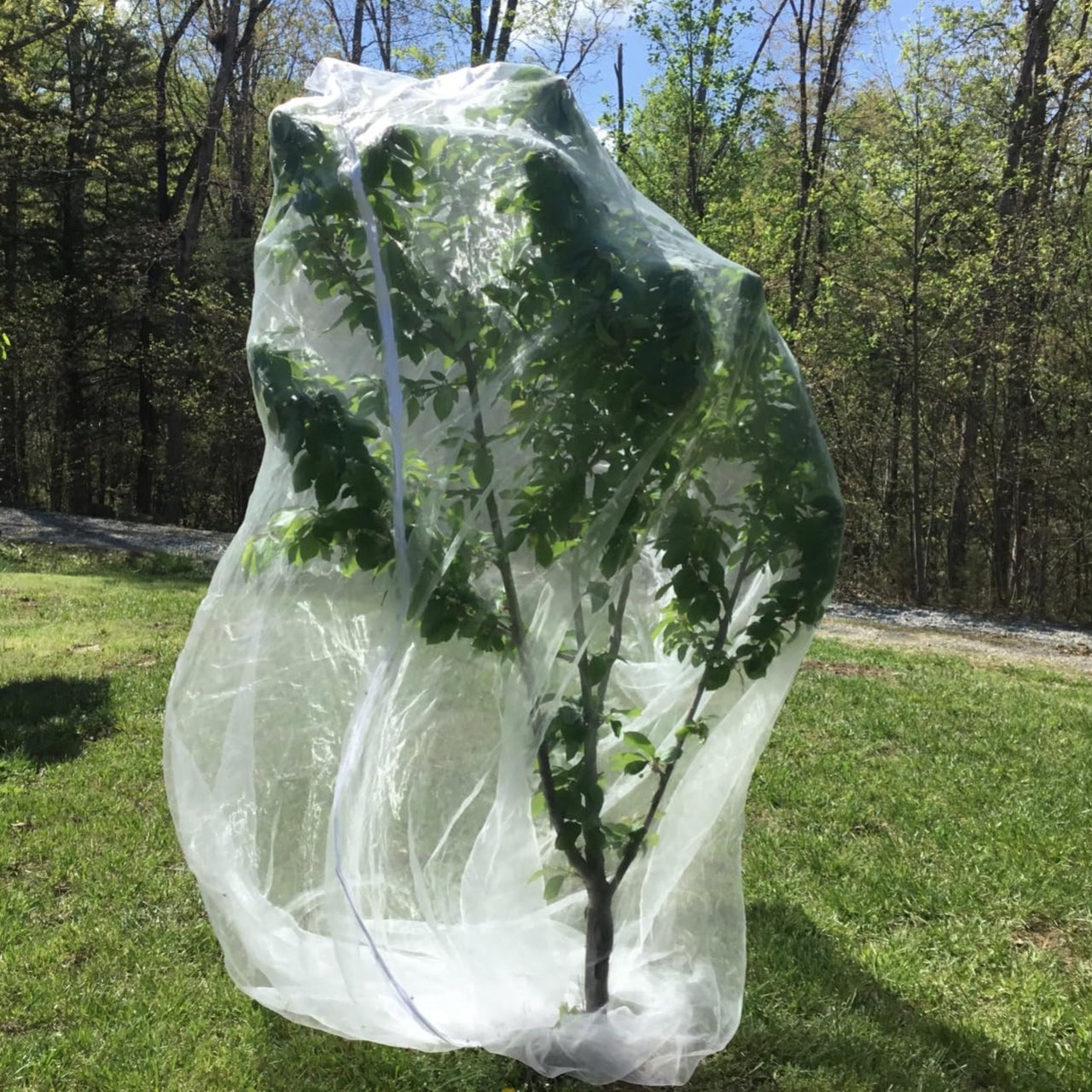
Harvest Without Harm  Our netting is compliant with wildlife regulations across Australia, so you can protect your fruit while also protecting our native wildlife! Protect your fruit and local wildlife at the same time with EnviroBug Tree Defender netting. Designed to help keep birds and insects away from your trees, it creates a simple physical barrier that helps safeguard blossoms, fruit and new growth without poisons or sprays. Birds and insects can damage fruit trees by eating fruit, breaking branches, stripping leaves or boring into the tree itself. Once fruit is damaged, it often falls early and can rot on the ground, while more serious damage can weaken the tree and affect future harvests. The best way to protect fruit trees is to stop pests from reaching them in the first place.  EnviroBug’s fine mesh netting helps block access while still allowing sunlight and moisture through, making it a practical, all-season solution for gardeners who want strong protection without harming native wildlife. Key Benefits Ultra-fine mesh protection (20D mesh). Helps keep birds, fruit flies, snails and other pests off your fruit while still letting sunlight and moisture through. Built to last. UV-stabilised polyethylene helps the net stand up to harsh sun and everyday garden use. Snug drawstring closure. Creates a secure fit around the trunk to help stop pests getting in underneath. Zippered access. Makes it easy to check, care for, and harvest your tree without removing the whole net. Uses for the Fruit Tree Netting EnviroBug’s Tree Defender is ideal for protecting fruit trees while they’re producing and vulnerable to birds, insects and other pests. It creates a physical barrier that helps keep your harvest intact without poisons, sprays or constant intervention. It’s also a smart choice for young trees, where tender growth can be more easily damaged. Using netting early helps protect developing trees while they establish, giving them a better chance to grow strong. Specific Recommendations For best results, install the netting after flowering, just as your fruit is starting to form. As our netting is insect proof, installing too early can prevent pollinators from accessing your flowers.  It’s also worth checking the net regularly, especially after garden work or windy conditions. A quick inspection helps you catch any movement or damage and make sure the net is still covering the tree properly.
Quick View
sale
Termite Ninja - Ultimate DIY Termite Eradication System - Envirobug
Termite Ninja - Ultimate DIY Termite Eradication System from $297.00 $891.00
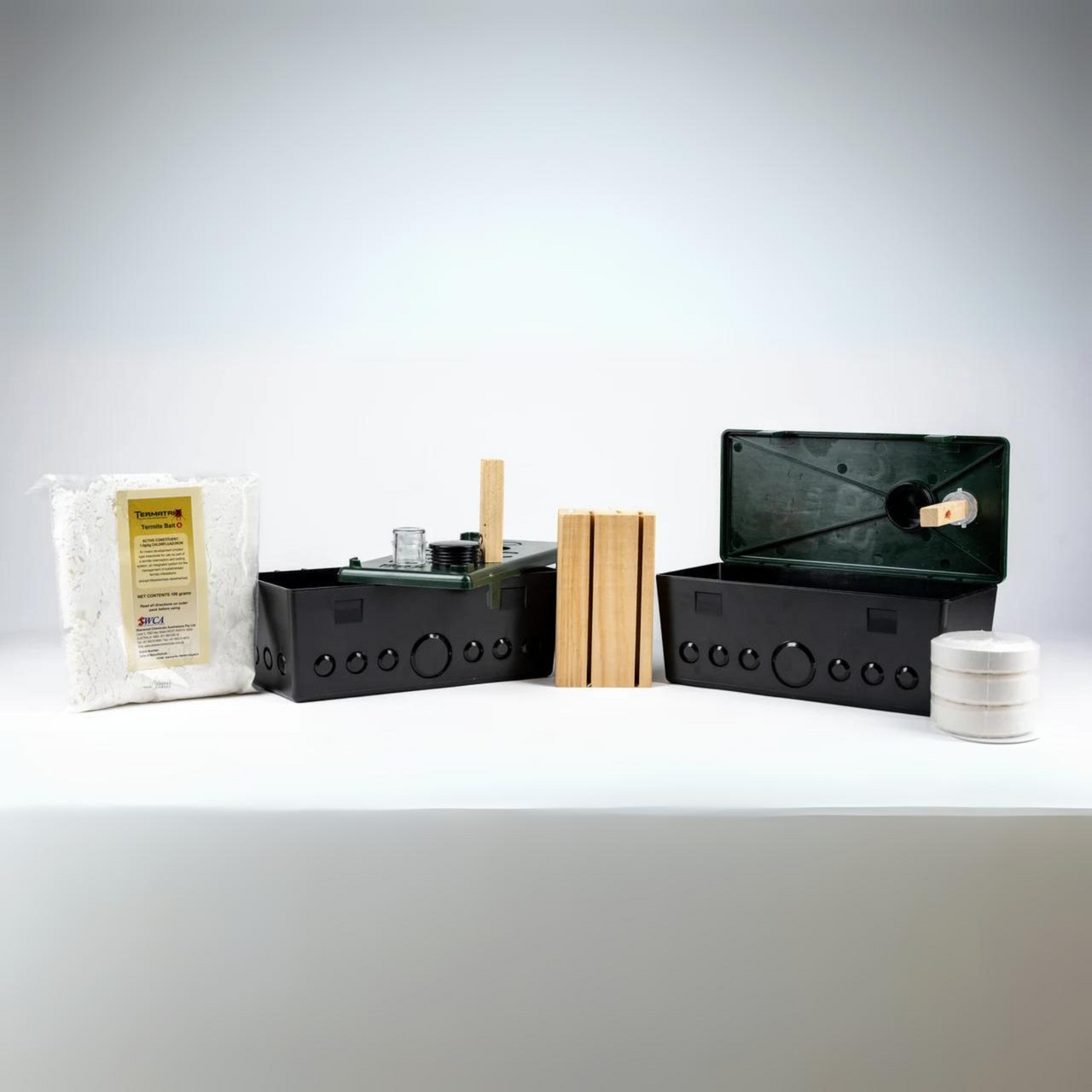
Get professional grade protection – but save 80% to 90% vs. paying an exterminator (Save over $4,000 for a large house) How Does the Termite Ninja Stack Up? Termite Ninja Traditional Exterminator Setup cost One-off kit purchase $2,000–$5,000+ treatment Annual monitoring $0 — you do it yourself $900+ per inspection Treatment cost Cost of killer bait only $2,000–$4,000+ Chemicals APVMA-approved IGR — harmless to humans and animals Often broad-spectrum soil chemicals - these can be toxic to both humans and pets. Flexibility Walls, ground, in-ground, stumps, patios Ground-only in most systems Lock-in None — your system, your schedule Annual contracts standard Termites cause more damage to Australian homes than fires, floods and storms combined — and the traditional answer is an exterminator who charges $900 a year just to look around and thousands more to treat. The Termite Ninja changes that equation entirely. Professional-grade monitoring, attraction and colony eradication — installed by you in minutes, owned by you permanently, with no ongoing fees and no locked-in contracts. We've never had a kit returned. Not one in 18 years. Safe for families. Devastating for colonies. APVMA-approved, harmless to humans and pets — catastrophic for the colony. Where Can I Install It? Termite Ninja is the only system that allows you to directly install termite bait stations to monitor and treat termites anywhere – not just on the ground. On walls — where mud tubes or damage is visible On the ground — around the full perimeter of your home In the ground — buried in-ground stations for perimeter interception On stumps — a favourite entry point for subterranean termites On patios and hardstand — anywhere termites have been spotted or are likely to travel. Why Choose Envirobug DIY Termite Ninja Multi-purpose Termite Control Monitor Bait Stations Compared With Others?   The Flexibility of Termite Ninja Monitor Bait Traps Compared With Other Traps:      How It Works The Termite Ninja runs on three phases: 1. Monitor — Specially prepared bait stations containing fresh wood and pure cellulose tablets are installed around your property's perimeter and anywhere termite activity is suspected. Termites are hardwired to seek cellulose. They find your stations before they find your home. 2. Detect — Check each station through the clear viewing window without touching or opening it. No disturbance, no false alarms, no tools. Just look. 3. Eradicate — When activity is confirmed, use the innovative stacking system to apply killer bait directly above the active station without scaring off the feeding termites. Workers carry chlorfluazuron IGR (a safe, non-toxic growth inhibitor) back to the nest, share it through natural colony behaviour, and the queen dies. Colony collapse follows. No guessing. No approximation. Bait applied directly where termites are active — like a ninja, right to the source. And they never saw it coming. Key Features Install Anywhere Termites Go — The only DIY system that lets you place bait stations on walls, on the ground, in the ground, on stumps and on patios. Not just ground-level. Everywhere termites travel. Saves Up to 80–90% vs. Professional Treatment — A large home can save over $4,000 in treatment costs and $900 every single year in inspection fees. The kit pays for itself almost immediately. Stacking System — The Game Changer — The innovative stacking design lets you apply killer bait directly above an active station without opening it or disturbing the termites feeding inside. This is the detail that makes the difference between termites staying and termites leaving. Clear Viewing Window — Monitor every station with a visual check, no tools, no disturbance. See exactly what's happening inside without touching a thing. Ant-Proof Design — Specifically designed to exclude ants. What you find inside is termites — not a false positive colony of black ants that wasted your time. Reusable Tough ABS Plastic — Built to last years of outdoor exposure, ground contact and weather. Can Be Painted to Match Your Home — Wall-mounted stations blend into your exterior. No eyesore, no visible pest control hardware on your facade. Everything Included — Full complement of cellulose attractant and killer bait powder included with your kit. Step-by-step installation guide and video delivered immediately by email after purchase. Safe. APVMA Approved. — Chlorfluazuron IGR at 1% per kg of pure cellulose. Completely harmless to humans, kids, pets and native wildlife. Devastating to termites. What's in the Kit Every kit contains all of these components - see the below table for the number of each included with each kit size: Termite Ninja multi-purpose ABS bait stations All assembly components — ready to install out of the box An equal number of specially prepared timber attractant and cellulose tablets - to attract termites Chlorfluazuron IGR Killer Bait powder sachet/s - to kill termites Immediate email delivery of step-by-step installation guide and video tutorials Additional attractant tablets and killer bait powder available separately as needed. Package Includes 4 Station 12 Station 18 Station 24 Station 36 Station Bait Station Boxes 4 12 18 24 36 Lid Kits 4 12 18 24 36 Indicator Dowels 4 12 18 24 36 Cellulose Bait Tablets 4 12 18 24 36 Wooden Termite Baits 4 12 18 24 36 Killer Bait Powder Treatments 1 2 3 4 5 User Manual ✓ ✓ ✓ ✓ ✓ Phone & Email Support ✓ ✓ ✓ ✓ ✓ Not sure which size to choose? Measure your perimeter in metres and divide by three — that's your minimum station count. Add one or two spares for killer bait treatments. When in doubt, size up. A gap in your perimeter is the only thing a termite needs.
Quick View

Designed for Australian Conditions

Eco-friendly

No poisons

12 month warranty

30 Day

satisfaction guarantee

Afterpay American Express Apple Pay Google Pay Shop Pay Visa Mastercard